1 month ago
The casualty figures remain small by historical US standards, but the lack of transparency has turned the discrepancy into a symbol of the Trump administration's broader foreign policy failure.
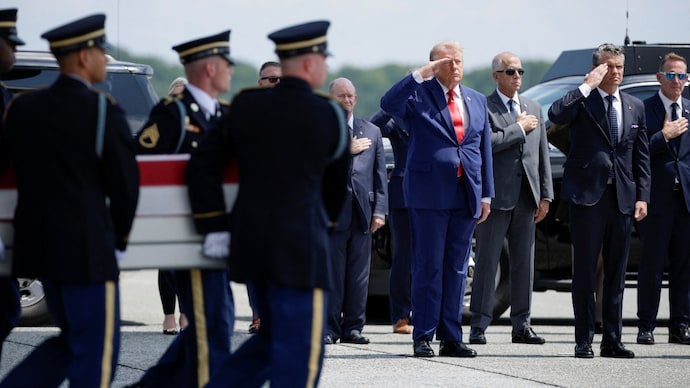
US President Donald Trump and Secretary of Defense Pete Hegseth salute during the dignified transfer of the remains of four US soldiers killed in the Iran war at Dover Air Force Base in Delaware.

New Delhi,UPDATED: Jul 25, 2026 23:01 IST
Eighteen dead on Wednesday. Fourteen on Thursday. The Pentagon's own casualty tracker just erased four American service members overnight, and Americans want to know why.
The question now dogging the Trump administration is simple and uncomfortable: is it hiding the true cost of the war with Iran?
The Defense Casualty Analysis System (DCAS), the Pentagon's public tracker for military casualties, showed the death toll falling from 18 to 14 between Wednesday and Thursday. The number of wounded fell too, from 482 to 420.
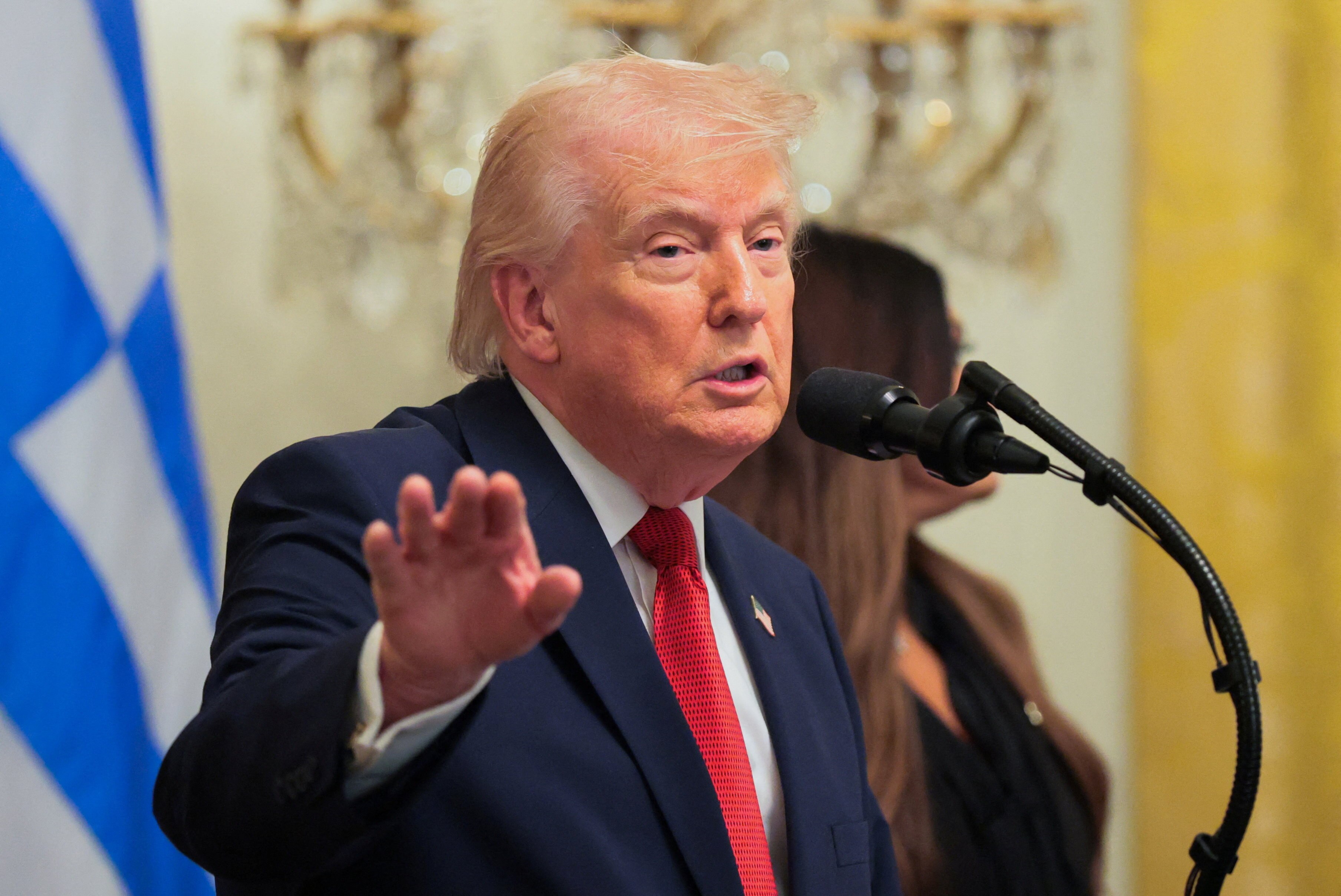
The Department of War is calling it a "data disruption." What makes that explanation harder to swallow is timing. The four missing troops had been honoured by President Donald Trump himself at a ceremony at Dover Air Force Base on July 22, days before they vanished from the official count.
Chief Pentagon spokesperson Sean Parnell acknowledged the discrepancy on X, saying the department was "aware of temporary data disruptions" on the DCAS website and that the issue was being looked into.
The DCAS is run by the Defense Manpower Data Center and is the only public system tracking American casualties from ongoing conflicts.
DEMOCRATS DEMAND ANSWERS
However, not everyone is buying it.
At least 12 Democratic senators signed a letter on Thursday to Defense Secretary Pete Hegseth, demanding a full accounting of casualties and asking what exactly was causing the inaccuracies.
"The information currently available to the public suggests that the Department has not consistently provided timely and comprehensive public casualty reporting throughout the conflict," the letter said.
Ned Price, a former State Department spokesperson, was more blunt. He dismissed the “technical glitch” as a cover, arguing that the public remains unaware of “the full extent of casualties suffered as a result of the decision to take the country to war without clear objectives."
The sharpest criticism came from former CIA chief Leon Panetta, who told The Guardian the information vacuum was "shameful."
"There's a deliberate effort here to basically withhold information from the American people, and I think it represents in many ways a shameful approach to sharing the responsibility that we all have when it comes to fighting a war," he said.
A WAR BY ANY OTHER NAME
The casualty confusion has fed into a bigger complaint: that the administration has been renaming its way around scrutiny.
The Trump administration declared in May that Operation Epic Fury, its codename for the Iran war, had ended. That declaration coincided with a ceasefire that collapsed earlier this month.
Since then, American strikes on Iranian targets have continued, this time over the unresolved standoff around the Strait of Hormuz. But instead of calling them what they are, the administration now refers to these strikes as "overseas operations."
Lawmakers say the relabelling is not accidental. They argue it is designed to obscure casualty counts and dodge the 60-day limit on military action without congressional authorisation, a limit rooted in the Constitution, which grants only Congress the power to authorise the use of military force.
A WAR THE PUBLIC NEVER WANTED
The controversy is landing at a politically dangerous moment for Trump. The war in Iran remains unpopular with American voters, driven largely by rising gas prices and the cost of living.
With the midterm elections in November and polls showing Republicans facing a tough fight to hold both chambers of Congress, Democrats are working to tie the unpopular war directly to affordability concerns.
Republicans have hit back, accusing their opponents of using a wartime moment to score political points and undermine the president.
The casualty numbers themselves remain small by historical standards, nowhere close to what the US suffered in Vietnam, Afghanistan or Iraq.
But the lack of transparency has turned what might have been a minor data discrepancy into something far more consequential: a symbol of the Trump administration’s broader foreign policy failure.
- Ends
Published By:
Aprameya Rao
Published On:
Jul 25, 2026 23:01 IST