1 month ago
The family of Dawn Sturgess have said they will finally be able to lay her to rest seven years after she was killed in the Wiltshire nerve agent poisonings, after an inquiry concluded she was the innocent victim of an attack by Vladimir Putin.
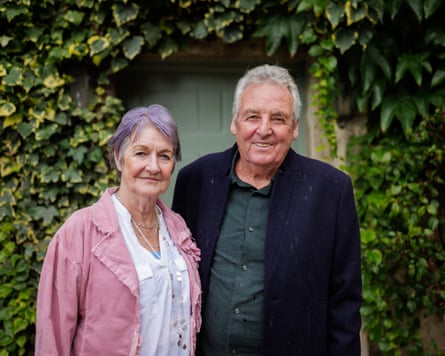
Stan Sturgess, Dawn’s father, said he was pleased the inquiry into her death had made it clear she was blameless but expressed concern that lessons may not have been learned that could stop such a tragedy happening again.
Describing his daughter as a “daddy’s girl” he said: “She has been public property for the last seven years. We’ve got her back now.”
He said her ashes remained at the home he and his wife, Caroline, share in a Wiltshire village. “We’ll be able to lay her to rest now this is over. We felt we couldn’t do anything while all this was going on. It’s been hanging over us for seven years.”
Sturgess, 44, died after spraying novichok, stored in a fake perfume bottle, over herself at the home of her boyfriend, Charlie Rowley, in Amesbury, Wiltshire, on 30 June 2018.
Rowley is believed to have found the bottle in a bin after it was discarded by the Russian agents who targeted former Russian spy Sergei Skripal three months before by placing novichok on the door handle of his home in Salisbury, seven miles from Amesbury.
The chair of the inquiry, Lord Hughes, concluded Putin must have authorised the attack on Skripal and he was “morally responsible” for Sturgess’ death. He called the attack a “public demonstration of Russian state power for both international and domestic impact”.
Hughes made limited criticism of the way the security services protected Skripal, who was living openly under his own name in a suburban cul-de-sac.
But Stan Sturgess said there was no evidence that lessons had been learned. “The times we’re living in now mean changes need to be made. The world’s gone crazy. Someone like Skripal might come to the UK again. Would things be done differently?”
He said he was still angry that Wiltshire police initially falsely characterised Sturgess as a drug user. The force has apologised for its mistake.
He said: “That was very hurtful. The biggest thing we have got is that it wasn’t Dawn’s fault.” He also said he felt public health officials should have warned people not to pick up objects that did not belong to them after the attack on Skripal.
But he did not feel hatred to Putin or to anyone else involved and said Rowley was a victim. “I don’t feel hatred to anyone,” he said.
After publication of the report in London on Thursday, the UK government announced new sanctions against Russia and summonsed the Russian ambassador to answer for what it called “Russia’s ongoing campaign of hostile activity against the UK”.
The prime minister, Keir Starmer, said: “The Salisbury poisonings shocked the nation and today’s findings are a grave reminder of the Kremlin’s disregard for innocent lives.”
Hughes said Alexander Petrov, Ruslan Boshirov and Sergey Fedotov were members of an operational team within the GRU – the Russian military intelligence agency responsible for foreign intelligence gathering.
He said: “Deploying a highly toxic nerve agent in a busy city was an astonishingly reckless act. The risk that others beyond the intended target might be killed or injured was entirely foreseeable.”
He said the bottle containing the novichok that Sturgess sprayed on herself was “probably” the same one the Russian agents used to apply poison to the door handle of Skripal’s house.
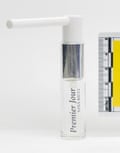
He said: “They recklessly discarded this bottle somewhere public or semi-public before leaving Salisbury. They can have had no regard for the hazard thus created, of the death of, or serious injury to, an unaccountable number of innocent people.”
Rowley has said that he found the bottle in a bin shortly before he gave it to Sturgess, but Hughes said it was “likely” he had come upon the bottle “within a few days” of it being abandoned on 4 March.
Hughes concluded there had been failings in Skripal’s management as an exchanged prisoner. “In particular, sufficient, regular written assessments were not conducted,” he said.
He also said he did not consider that the attack on Skripal could have been avoided by additional security measures. “The only such measures which could have avoided the attack would have been such as to hide him completely with a new identity.”
Hughes said that, after the Salisbury attack, extra training for emergency services on recognising symptoms from nerve agent exposure should have been more widely circulated. He criticised Wiltshire police for wrongly characterising Sturgess as a drug user after she was poisoned.
Rowley said he believed his health continued to be compromised by the poisoning. He said: “I’m still struggling with my eyesight. I have blurry and double vision. I also have some memory issues. You have to live with it. I think the novichok affected me.” He paid tribute to Sturgess. “She was a lovely woman.”