3 weeks ago
JD Vance met senior Iranian leaders in Switzerland to advance last week's interim deal. The talks now hinge on nuclear terms, Hormuz shipping and the fragile Lebanon ceasefire.

Obbuergen,UPDATED: Jun 21, 2026 22:28 IST
US Vice President JD Vance said on Sunday there was an opportunity to "turn over a new leaf" with Iran as the two sides held talks in Switzerland to build on the interim deal reached last week to end the war in Iran. The US is seeking to keep Iran in negotiations over its nuclear programme and secure a commitment from Tehran to keep the Strait of Hormuz open, even as the conflict in Lebanon between Israel and the Iranian-backed Hezbollah threatens to disrupt the effort.
Vance met Iran's parliamentary speaker Mohammad Bagher Ghalibaf and Foreign Minister Abbas Araghchi at a resort near Lake Lucerne. Pakistani and Qatari mediators were also present for the direct meeting, which Iranian state media said lasted about 80 minutes. The US and Iranian teams also held separate private talks with Pakistani and Qatari officials as both sides entered what has been described as a 60-day push to settle the technical details of the agreement.
As the talks, dubbed the "Lake Lucerne Summit", began, Vance said, "The question before us now is how much more can we accomplish together? Can we turn over a new leaf?" He added, "Can we change relations in the Middle East permanently, or do we go back to doing things the old way, which is not our preference, but is certainly very much something that can happen."
Iran, however, said it wanted to first focus on Israeli strikes in Lebanon. Foreign Ministry spokesman Esmail Baghaei told the country's state news agency ahead of the meeting that the Iranian team wanted the negotiations to focus on the war between Israel and Hezbollah. The agreement signed last week has already come under strain after fighting escalated in Lebanon and after Iran's military announced that it had again closed the vital waterway. A renewed ceasefire in Lebanon, brokered on Saturday, appeared to be holding.
Vance said "great progress" had been made on Lebanon. But minutes later, President Donald Trump posted a fresh warning to Iran if it did not rein in Hezbollah. "If they don't, we'll hit Iran very hard again, just like we did last week, only harder!!!" Trump wrote.
Iran approached the talks cautiously, with Baghaei saying, "The implementation of any document is more important than its signing." Iran's President Masoud Pezeshkian also said the country would keep its right to a nuclear programme. "What is certain is that we will never back down from the right to enrich uranium, and the other side is also forced to accept it," he said, according to Iran's state media.
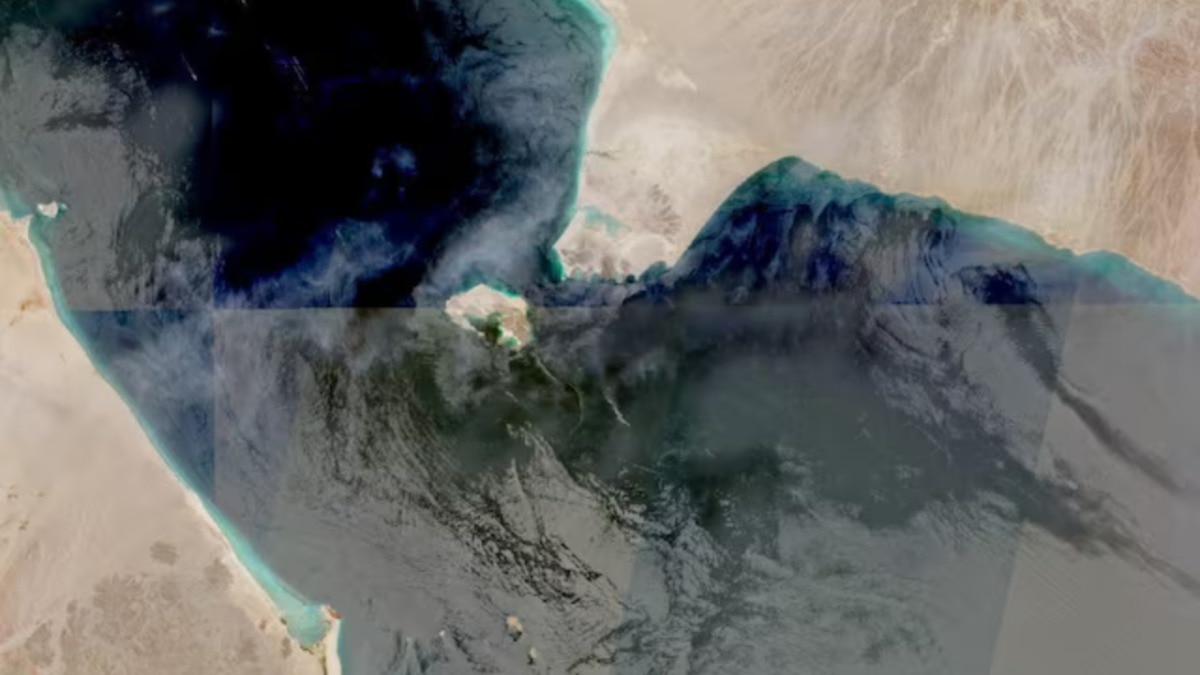
The meeting had earlier been delayed. Vance had been expected to arrive at the Burgenstock resort near Lucerne on Friday, but his departure from the United States was delayed after fighting intensified in Lebanon, and Iranian officials cancelled their plans to attend at that stage. US Central Command later disputed Iran's claim that it had once again shut the Strait of Hormuz, saying US forces were continuing to monitor the situation to ensure traffic kept moving. Vance said millions of barrels of oil had passed through the strait in recent days.
Vance was joined in Switzerland by special envoy Steve Witkoff and Jared Kushner, Trump's son-in-law. Witkoff and Kushner had reached Switzerland earlier to discuss technical details of the nuclear talks. Vance said he expected to stay in Switzerland for only "a day or two", leaving much of the detailed negotiations to Witkoff and Kushner. His role in the talks has also drawn scrutiny as he considers a 2028 presidential campaign.
The agreement has also triggered criticism in the US. Trump and Vance have faced sharp attacks from Republican hard-liners, who have compared it unfavourably with the nuclear deal signed under the Obama administration, which Trump and other Republicans have long said failed to end Iran's nuclear programme. The new agreement immediately allows Tehran to sell its oil freely and opens the way for Iran to access billions of dollars in frozen assets. It also calls for Iran to dilute its stockpile of highly enriched uranium, which is believed to be buried under nuclear sites targeted in US strikes last summer.
Pezeshkian has nevertheless insisted on Iran's right to enrich uranium. In a telephone interview with Fox News on Sunday, Trump warned that the Iranian president "better watch his mouth". Fox News quoted Trump as saying, "He'd better shape up, or we'll take over the rest of the country."
The agreement says commercial vessels can pass through the Strait of Hormuz for 60 days without charge, though it does not rule out future fees imposed by Iran. Trump separately threatened on Saturday to impose US tolls if there is no deal with Iran within 60 days, saying in a social media post that the money would be for "services rendered as the Guardian Angel to the countries of the Middle East." The Trump administration has meanwhile tried to reassure global markets that the Iran war has been only a brief shock to oil prices, after US motorists complained of higher petrol prices ahead of the peak summer travel season. After the White House announced the deal a week ago, oil futures fell nearly 8 per cent, and markets were expected to closely track the talks when trading resumed on Sunday evening.
The situation remains complicated because neither Israel nor Hezbollah is a signatory to the US-Iran deal. Israeli Prime Minister Benjamin Netanyahu has said his forces will stay in southern Lebanon until any threat to Israel is removed, while Hezbollah has said it will not stop its attacks unless Israel commits to leaving Lebanon. The talks in Switzerland therefore moved ahead with the nuclear programme, the Strait of Hormuz and the fighting in Lebanon all weighing on the next phase of the deal.
With PTI Inputs
- Ends
Published By:
India Today Web Desk
Published On:
Jun 21, 2026 22:28 IST