1 month ago
Angus Taylor says we need to ‘drill more, 100%’
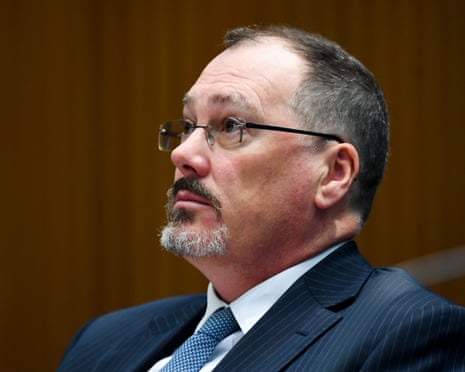
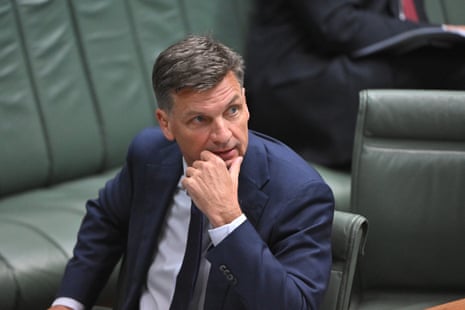
The opposition leader, Angus Taylor, is speaking in New South Wales about the ongoing fuel issues linked to the war in the Middle East. He said he thinks we need to “drill more, 100%”.
Taylor said:
We’ve got great resources. Bass Strait is an old source of oil and gas, but an important one, and we need to get the most out of it, and we’ve got new emerging sources in the north in the Beetaloo basin.
So we need to see that drilling happen at pace. This is a government that’s made it very hard for resources companies to get the approvals they need … to get resources, oil and gas, out of the ground.
Key events Show key events only Please turn on JavaScript to use this feature
Sarah Collard
Aboriginal woman dies in Perth prison
The WA Department of Justice has confirmed that a 35 year old Aboriginal woman has died in custody at the Badyup Women’s prison in Perth’s outer north.
Staff found her unresponsive in her cell early Monday morning and provided first aid before emergency services arrived.
The Department of Justice says the woman was declared deceased on site and early investigations indicate no suspicious circumstances in the woman’s death.
WA Police are preparing a report for the state coroner.
In response to the woman’s death, the Network of Incarcerated & Formerly Incarcerated Women and Girls said they were devastated by her passing.
The advocacy group said overcrowding, punitive policies, and a lack of support for vulnerable women are contributing to the growing incarceration of First Nations women.
Lorraine Pryor, Network member and Founder of WA based organisation Voice of Hope said many are survivors of violence and abuse.
These conditions are not incidental, they are the predictable outcome of policies that continue to expand policing and imprisonment, including increasingly punitive bail laws that are driving the imprisonment of more women, many of whom are themselves survivors of violence and poverty.
Aboriginal women are particularly impacted by these policies. They are the fastest growing prison population in Australia, and their deaths in custody continue to expose the ongoing violence of a system that was never designed to care for them.
Nearly two-thirds of Australians not getting enough calcium in their diets, ABS data shows
Dairy, tofu and leafy greens need to up their game as Australians aren’t getting enough calcium from the food and drinks in their diet, new data released today by the Australian Bureau of Statistics suggests.
The first analysis on nutritional requirements for vitamins and minerals in a decade found more than 60% of Australians fell short of meeting their calcium needs in 2023, which hadn’t changed since 2011-2012.
Linda Fardell, ABS head of health statistics, said diets that are low in calcium are linked to an increased risk of developing osteoporosis.
Over three-quarters of females and over half of males didn’t meet their calcium requirements, increasing to about 90% for females aged 12–17 years and 50 years and over.
Fardell:
Iron and folate are other nutrients where females have higher requirements and lower intakes in some age groups.
For example, 48 per cent of females aged 18–29 years did not meet their iron requirements compared to 8 per cent of males in the same age group.
‘Iranian women’s footballers shouldn’t have to choose between their sport and their safety’
Nos Hosseini is a spokesperson for the Iranian Women’s Association. In an opinion piece for Guardian Australia, she writes:
When seven members of Iran’s women’s national football team sought protection in Australia, it appeared they had finally found safety. Within days, some made the difficult decision to return to Iran despite the risks.
For many Iranian athletes, the most powerful opponent they face is not across the field. It is the regime that controls their lives.
To compete internationally, they must submit to a system that demands obedience, restricts their movement and punishes dissent.
Read more here:
Body found in Hobart after man falls overboard on research ship
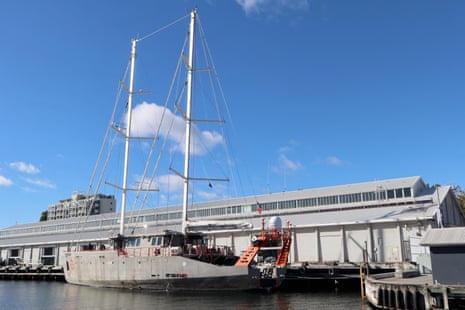
Divers have recovered the body of a man who is believed to have fallen from a French Antarctic research vessel docked in Hobart, AAP reports.
The man, aged in his 20s, was reported missing by crewmates of the Perseverance at 3.55am on Tuesday. Police searches were conducted at the Sullivans Cove waterfront, with his body discovered shortly before 7.45am.
The Perseverance is a 42m French ocean-going sailing vessel designed for scientific research and supply missions in polar waters.
The ship set sail from New Zealand on 20 January on a mission to study breeding patterns of species in Antarctic waters. Tasmania Police are expected to provide more information later on Tuesday.

Graham Readfearn
Far north Queensland on cyclone watch
Communities in far north Queensland have been asked to be on alert with the latest Bureau of Meteorology forecast suggesting a tropical low in the Coral Sea could become a cyclone as early as tomorrow evening.
The timing of a likely declaration has shifted with tropical low 34U now being given a high chance of becoming a cyclone – which will be called Narelle if it eventuates – earlier than was forecast yesterday.
Current weather models suggest a landfall somewhere north of Cooktown late on Thursday or on Friday morning when the system is expected to track west over the Gulf of Carpentaria.
Angus Taylor says we need to ‘drill more, 100%’
The opposition leader, Angus Taylor, is speaking in New South Wales about the ongoing fuel issues linked to the war in the Middle East. He said he thinks we need to “drill more, 100%”.
Taylor said:
We’ve got great resources. Bass Strait is an old source of oil and gas, but an important one, and we need to get the most out of it, and we’ve got new emerging sources in the north in the Beetaloo basin.
So we need to see that drilling happen at pace. This is a government that’s made it very hard for resources companies to get the approvals they need … to get resources, oil and gas, out of the ground.

Daisy Dumas
NSW becomes first state to launch digital birth certificates
People aged 16-21 in New South Wales are the first Australians to be able to set up digital birth certificates.
The state government said the digital documents, launched today, were designed to international security standards and could be set up via the Service NSW app.
Sixteen to 21-year-olds born in NSW and who hold a NSW photo card or driver licence are eligible to apply.
The government said digital birth certificates can be used to verify identity and apply for licences and certifications needed to start a job – and that, over time, the move will give people greater control over what information they share.
Jihad Dib, the minister for customer services and digital government, said:
I’m proud that NSW is the first place in Australia where young people across the state can carry their birth certificate securely on their phone – instead of having to rummage through drawers or call mum and dad!
He said the technology was “the same as having a birth certificate in your pocket – but much more secure”.
Households struggle with confidence as cash rate rise looms

Patrick Commins
A parade of bad news overseas, soaring petrol prices and expectations of higher interest rates have left households the gloomiest they have been since the onset of the Covid-19 pandemic in early 2020.
ANZ’s weekly consumer sentiment survey revealed a severe confidence hit to Australians still struggling to cope with the high prices left by the pandemic inflation outbreak.
Sophia Angala, an ANZ economist, said “households are increasingly pessimistic about the one-year and five-year outlooks for the economy, likely driven by geopolitical uncertainty and the shifting outlook for inflation and rates”.
The Reserve Bank is expected to lift its cash rate target to 4.1% at 2.30pm today, in a double blow to households facing a 30-40% jump in fuel prices since the start of the US-Israel war on Iran.
“With inflation above target and the labour market viewed as tight by the RBA, there is likely to be less tolerance than usual to an external inflation shock, in this case from higher oil prices,” Angala said.
More on police operation at Lidcombe
We have more details from Lidcombe, where a major police operation ended a short time ago.
Police say an investigation is now under way after a woman was threatened by a man armed with a gun at a multi-level car park on Uhrig Road at about 7.20am.
The man, who was not known to the woman, left the scene in a white Subaru SUV with cloned number plates, police said. The woman was shaken but not physically injured.
A perimeter was established and specialist officers were called to assist. An extensive search of the area was conducted, police said. No shots were fired, they said.
Police are appealing for any information or dashcam vision related to incident.

Caitlin Cassidy
Confidentiality clauses ‘silence’ students’ complaints, ombudsman says
Students may be choosing not to seek support from their universities over sexual harassment and assault complaints because of confidentiality clauses preventing them from speaking with anyone about their experience, a new report has found.
The Student Ombudsman’s first report, published on Tuesday, found 21 universities used confidentiality clauses in their complaints – applying to around 770,000 students. The clause often automatically apply to students when they lodge a complaint, preventing them from speaking with anyone outside of the university about their experience or the complaint’s outcome.
In some instances, student wellbeing and recovery were put at risk, including a university beginning misconduct proceedings against a student when it alleged they breached confidentiality after reporting sexual harassment to their university.
The ombudsman, Iain Anderson, said students “should have the right to talk to others for support and seek external advice after they have made a complaint to their higher education provider”.
Excessive confidentiality can cause a complainant to feel silenced or disempowered … I am concerned that students … could be left unable to discuss the situation with a support person, seek legal advice, contact a health professional for support, or take ownership of how they talk about a traumatic experience including gender-based violence.
The ombudsman was established last year to tackle gender-based violence on university campuses.