16 hours ago
Russia pounded Kyiv and other Ukrainian cities with missiles, drones and guided bombs overnight. The strikes highlighted Ukraine's Patriot shortage as attacks on energy and shipping targets widened pressure on both sides.

Kyiv,UPDATED: Jul 19, 2026 21:16 IST
Russia attacked Kyiv and other Ukrainian cities with ballistic missiles, drones and guided bombs on Sunday, killing at least six people and injuring dozens, authorities said. The strikes again drew attention to Ukraine's shortage of US-made Patriot air defence systems, which are seen as the most effective way to intercept Russian ballistic missiles.
Ukraine said Russia launched 41 missiles and 125 drones overnight, with President Volodymyr Zelenskyy saying most of the missiles were aimed at the capital. The attacks also hit areas near Kharkiv, as well as Kherson and Sumy. Separately, both sides reported fresh strikes on oil and shipping infrastructure linked to Russia's energy sector and the Black Sea.
The latest attack on Kyiv began at around 1.30 am and went on for several hours, with explosions heard across the city. In recent weeks, Moscow has increased its use of ballistic missiles as it tries to curb Ukrainian strikes on oil facilities deep inside Russia, which have caused major fuel shortages affecting both the military and civilians.
US President Donald Trump has said he is prepared to grant Ukraine licences to produce Patriots, but the details and timeline are still unclear, and full production could take years. For now, the shortage remains a major challenge for Kyiv.
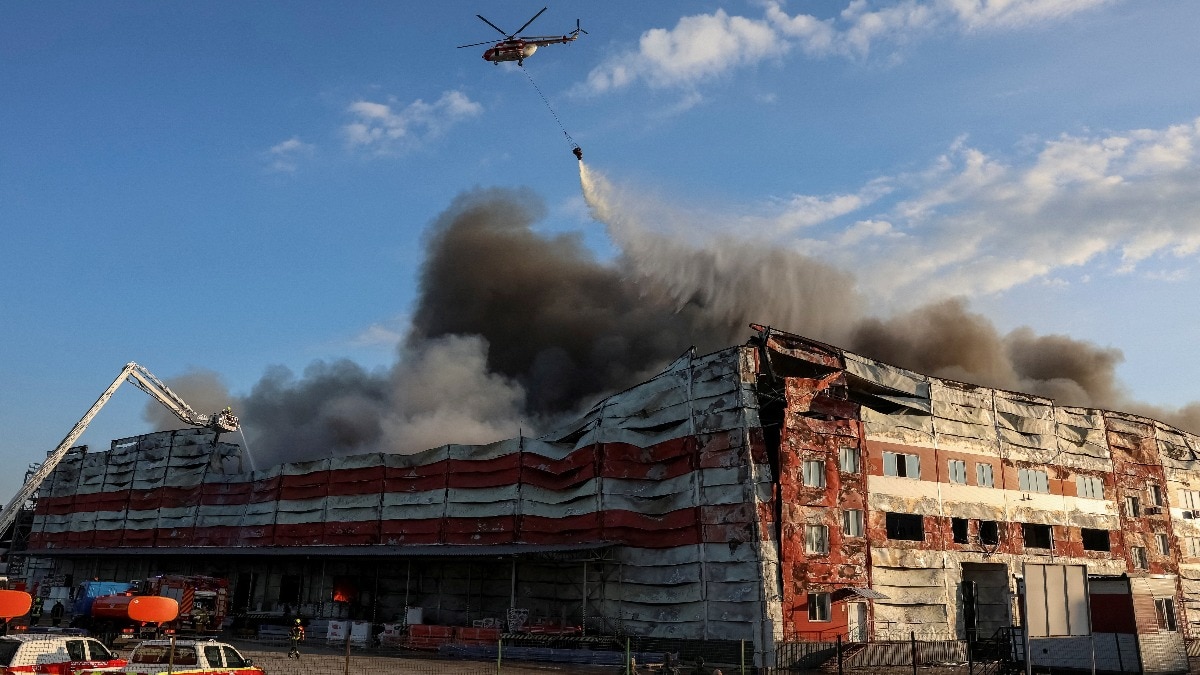
The strikes on Kyiv caused fires in five districts and damaged homes, office and industrial sites, a dormitory and vehicles, according to Ukraine's State Emergency Service. Rescuers pulled four people from a burning house in the Sviatoshynskyi district. In the Shevchenkivskyi district, they tried to save people from a three-storey building on fire, where one person was found dead. Firefighters also tackled blazes in the Solomyanskyi, Desnianskyi and Dnipro districts.
Viktoria Shejko, 32, said she was sheltering in the corridor of her apartment block with her husband and seven children when the blasts began. "When the alarm started, we checked that there were ballistics, then went into the corridor. Then it started exploding one missile after another," she said. She added that the strain of constant bombardment was "very difficult psychologically" and said, "It used to be once a week or even more rarely, but now if not every day, then every other day."
Later on Sunday, a Russian attack on a postal facility near Kharkiv, Ukraine's second-largest city, killed three people and injured at least 20, according to the regional administration. Russian guided bombs also struck Kherson and Sumy, with local authorities and Ukraine's emergency service saying each attack killed at least one person.
Russia's Defence Ministry said the attack on Kyiv had targeted sites linked to the Ukrainian military, including plants producing Flamingo drones and parts for Neptune guided missiles. It also said a postal terminal used for storing dual-use goods and assembling drones, robotic systems and electronic warfare equipment had been targeted.
Separately, a strike on two oil tankers at the Caspian Pipeline Consortium terminal off Russia's Black Sea coast halted oil loadings at the site, the company said on Sunday. The attack on the ASIA and NISSOS tankers at the port of Novorossiysk caused a fire on board the ASIA, which was later put out. The company did not say who carried out the strike. It said there were no casualties or oil spills, and that both tankers, sailing under the flags of Liberia and the Marshall Islands, remained afloat.
Russia and Ukraine have sharply increased strikes on ships in the Black and Azov seas over the past week. Ukraine says it is targeting Russia's so-called shadow fleet, which transports oil in violation of international sanctions imposed over the Kremlin's invasion of its neighbour. Kyiv has for months targeted Russia's oil industry, saying it directly supports and finances Moscow's war effort through export earnings, and those attacks have led to severe fuel shortages in Russia.
The Caspian Pipeline Consortium operates a 940-mile, or 1,510 km, oil pipeline linking Kazakhstan's Caspian Sea oil fields with Novorossiysk, where the oil is loaded on to tankers and sent to global markets. The pipeline handles about 80 per cent of Kazakhstan's crude exports, and the Russian government and Russian state oil firms together hold a 31 per cent stake in the venture.
Zelenskyy said on Sunday that Ukrainian units had also struck more energy infrastructure inside Russia. He said Ukraine's Security Service hit three oil depots in the Stavropol region, while a separate army unit struck another fuel-related facility there. He also said three Russian tankers were hit in the Black Sea.
Earlier, Stavropol Governor Vladimir Vladimirov said Ukrainian drone attacks had caused fires at "industrial facilities" in two locations in the region, but he did not identify the sites and said no one was hurt. Russian outlet Astra said three oil depots might be on fire in Stavropol, based on its review of photos and videos sent by local residents.
Russia's defence ministry said its air defence systems shot down 140 Ukrainian drones overnight into Sunday over eight Russian regions, annexed Crimea, and the Black and Azov seas. It did not say how many drones had been launched or how many reached their targets. In the Kursk region near the Ukrainian border, local Governor Alexander Khinshtein said Ukrainian drones hit four apartment buildings, causing a fire and injuring one person.
Sunday's developments showed the war continuing on several fronts, with Russia striking Kyiv and other Ukrainian cities while Ukraine reported attacks on Russian oil, fuel and shipping targets, underscoring the pressure on air defences, energy infrastructure and transport links on both sides.
With PTI Inputs
- Ends
Published By:
India Today Web Desk
Published On:
Jul 19, 2026 21:16 IST