1 month ago
The agreement will allow American companies to provide technology and expertise for Saudi Arabia's civilian nuclear programme, giving US firms access to what could become one of the world's biggest nuclear energy markets. But the commercial opportunity has been overshadowed by concerns.
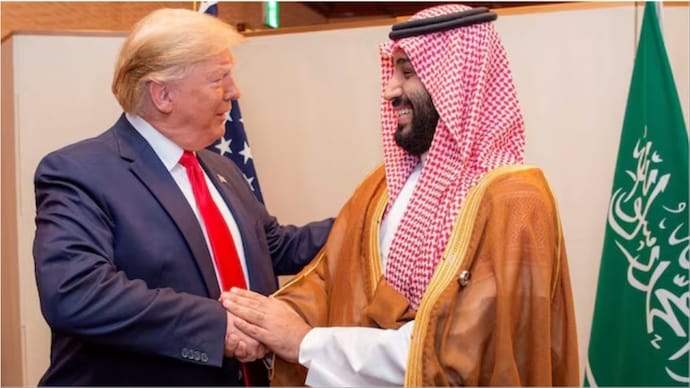
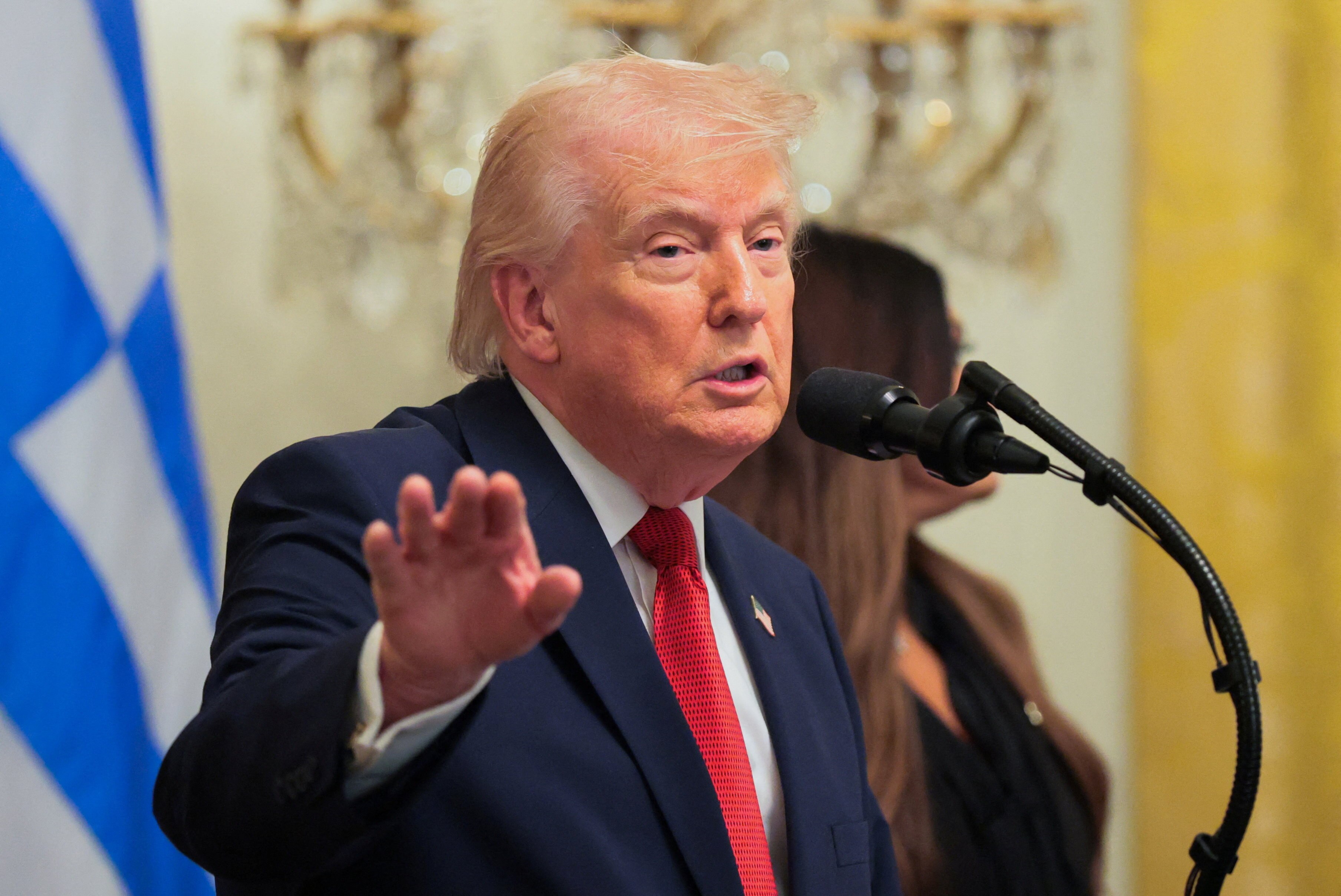
The agreement will allow American companies to provide technology and expertise for Saudi Arabia's civilian nuclear programme. (File Photo: Reuters)
A deal meant to power Saudi Arabia's energy future is instead fuelling fears of a new nuclear race in the Middle East. US President Donald Trump has signed a landmark 30-year civil nuclear agreement with Riyadh that could allow the kingdom to enrich uranium for power reactors, according to several US media outlets.
The agreement will allow American companies to provide technology and expertise for Saudi Arabia's civilian nuclear programme, giving US firms access to what could become one of the world's biggest nuclear energy markets. But the commercial opportunity has been overshadowed by concerns that the deal weakens long-standing safeguards against the spread of nuclear weapons.
WHY THE DEAL IS CAUSING CONCERN
According to Reuters, the proposed pact does not include the traditional US "gold standard" restrictions that prevent partner countries from enriching uranium or reprocessing spent nuclear fuel. It also excludes an "additional protocol" that would subject Saudi Arabia's programme to tougher international inspections. The agreement includes limits on what inspections may be carried out, according to a US official, a provision that is expected to face close scrutiny in Congress.
The issue centres on uranium enrichment. While many countries operating nuclear power plants import reactor fuel from abroad, Saudi Arabia wants to produce its own. Earlier this year, the kingdom announced plans to enrich uranium into "yellowcake" fuel for civilian reactors, with the possibility of selling it in the future.
Although uranium enrichment is permitted under international law for peaceful purposes, the technology has long been viewed as a double-edged sword. The same facilities that produce fuel for nuclear power stations can, if further refined, generate weapons-grade material. That possibility has made enrichment one of the most contentious aspects of global non-proliferation efforts.
A TEST OF US NON-PROLIFERATION POLICY
The proposed agreement also comes at an awkward moment.
The US has been defending its military campaign against Iran by arguing that Tehran's uranium enrichment programme posed a serious security threat.
Against that backdrop, allowing Saudi Arabia to enrich uranium without imposing similar restrictions is likely to invite accusations of inconsistency in US policy.
The proposal is also expected to be watched closely by Israel. Although Israel has never officially admitted possessing nuclear weapons, it is believed to maintain an undeclared nuclear arsenal and has consistently opposed neighbouring countries gaining sensitive nuclear capabilities.
Saudi Arabia has further fuelled those concerns through its own statements. Riyadh has previously warned that if Iran ever acquires a nuclear weapon, the kingdom would have to follow suit. While Saudi officials continue to call their programme a civilian energy initiative, such remarks have kept questions alive about the country's long-term strategic intentions.
WHY SAUDI ARABIA WANTS NUCLEAR ENERGY
For Saudi Arabia, the programme is driven as much by economics as by energy security.
Under Crown Prince Mohammed bin Salman's Vision 2030 strategy, the kingdom is trying to diversify its economy, reduce carbon emissions and rely less on burning oil to generate electricity.
According to the US Energy Information Administration, nearly all of Saudi Arabia's electricity is currently produced using natural gas and crude oil. During the summer, the kingdom burns around 1.4 million barrels of crude oil every day to meet soaring electricity demand.
Expanding nuclear power would reduce that dependence, freeing more crude for export while supplying electricity to energy-intensive sectors such as desalination plants and air-conditioning systems. From Riyadh's perspective, nuclear energy is not just about cleaner power—it is also about generating higher long-term revenues from oil exports.
WHAT'S IN IT FOR WASHINGTON?
The proposed agreement offers both strategic and commercial benefits for the United States.
American companies would be well placed to secure multibillion-dollar contracts to build reactors, provide equipment and support Saudi Arabia's nuclear infrastructure for decades. At the same time, the partnership would strengthen Washington's influence over the kingdom's nuclear programme at a time when China and Russia are expanding their footprint across the Middle East.
Civil nuclear cooperation had also been part of earlier US efforts to encourage Saudi Arabia and Israel to normalise relations. Although Reuters has reported that those discussions are now separate, a nuclear agreement could still reinforce broader US-Saudi ties.
The deal must still pass congressional review under Section 123 of the US Atomic Energy Act, which sets strict non-proliferation conditions for countries seeking US nuclear cooperation. That process is expected to become the next major battleground.
RIYADH HAS OTHER OPTIONS
Even if Congress blocks the agreement, Saudi Arabia is unlikely to abandon its nuclear ambitions.
China Nuclear Corp (CNNC) has reportedly submitted a proposal to build a Saudi nuclear power plant, while Russia's Rosatom has already signed preliminary cooperation agreements with Riyadh. South Korea and France are also regarded as strong contenders.
That gives Saudi Arabia considerable leverage. If Washington steps away, Riyadh has several alternative partners ready to fill the gap.
- Ends
With inputs from agencies
Published By:
Satyam Singh
Published On:
Jul 22, 2026 18:16 IST