 1 month ago
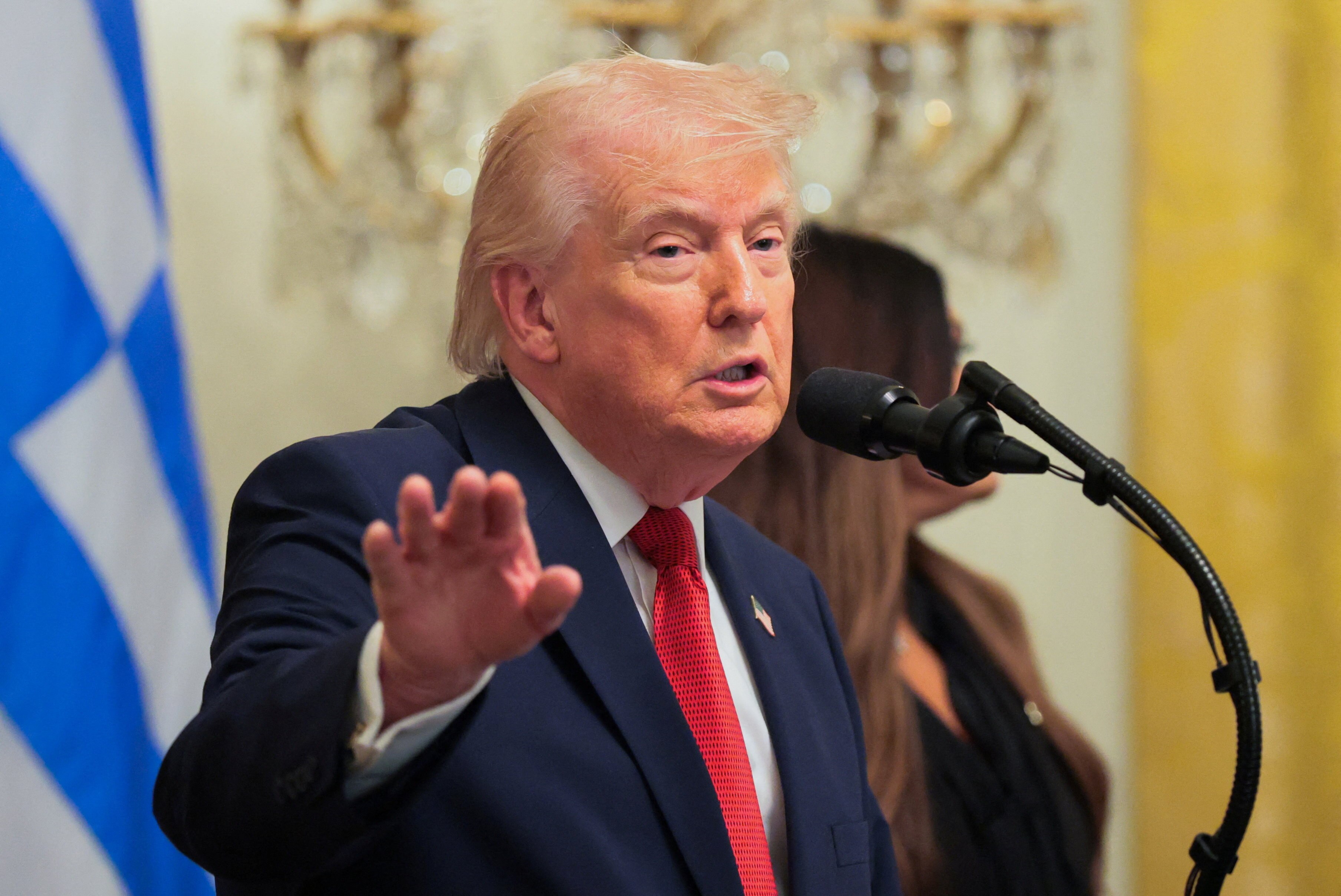
Two groups of small businesses have sued over Donald Trump's new Section 301 tariffs. The cases test whether the administration can sustain levies likely to remain in place for years.

Newyork,UPDATED: Jul 25, 2026 21:54 IST
US President Donald Trump's latest tariffs are facing fresh legal challenges, with two lawsuits filed by small businesses against the new levies announced on Thursday. The tariffs impose double-digit duties on 60 trading partners and cover 99 per cent of US imports.
The measures were introduced under Section 301 of the Trade Act of 1974, with the Trump administration saying they target countries that failed to prevent imports made with forced labour. Critics, however, say the move is aimed less at stopping forced-labour imports and more at replacing the worldwide tariffs Trump imposed last year, which were struck down by the Supreme Court in February.
The new tariffs came as temporary 10 per cent worldwide tariffs, which had also been challenged in court, expired. Educational toy company Learning Resources, which was part of the earlier tariff case that succeeded in the Supreme Court, filed a fresh suit on Friday in the Court of Trade along with several other small businesses.
A second lawsuit was filed by Burlap and Barrel, a New York-based spice company, and Collective Horology, a watch retailer based in Ventura, California. They are being represented by Liberty Justice Centre, a libertarian advocacy group.
Both lawsuits argue that the government did not properly establish its case against each specific economy or explain how the tariffs would end the practice they were imposed for, as required under Section 301. Sara Albrecht, chairman and CEO of Liberty Justice Centre, said, "Forced labour is morally indefensible, but an important objective does not give the government permission to ignore the law." She added, "The administration allowed one global tariff to expire and immediately replaced it with another under a different statute. Changing the statute doesn't change the law."
The White House did not immediately respond to a request for comment. Experts said it may be harder to challenge this round of tariffs than earlier ones. Trump had used Section 301 to impose steep tariffs on China in his first term, and those measures survived court challenges. Lawyer Patrick Childress, a partner at Holland & Knight and a former US trade official, said that unlike the Section 122 levies that expired on Friday, "these tariffs will be with us for the long haul". He said that even if countries adopt the exact policies the US wants, they would still have to prove to Washington's satisfaction that they are enforcing them before the tariffs are lifted. "This suggests that no short-term path for country-wide relief from the new Section 301 tariffs will be available," he said.
In short, Trump's new Section 301 tariffs have quickly triggered two fresh court battles, with small businesses arguing that the government has not met the legal requirements for imposing them, even as experts say the measures may be difficult to overturn.
With PTI Inputs
- Ends
Published By:
India Today Web Desk
Published On:
Jul 25, 2026 21:54 IST