1 month ago
The US launched fresh strikes on Iran after Donald Trump said Washington was restoring a Hormuz blockade. Iran retaliated by hitting Bahrain and UAE-linked tankers, raising fears for oil supplies and regional security.

Stock photo used for illustration

Dubai,UPDATED: Jul 14, 2026 07:44 IST
The United States launched fresh strikes on Iran early Tuesday, hours after President Donald Trump said Washington was "reinstating" a blockade on Iran in the Strait of Hormuz and would seek reimbursement from ships for safe passage. Iran responded by attacking Bahrain and two tankers linked to the United Arab Emirates in the strait, deepening tensions around a waterway that is vital to global energy supplies.
The latest exchange has sharpened the contest between Washington and Tehran over control of the strait, through which a fifth of all crude oil and natural gas once passed in peacetime. Benchmark Brent crude rose 7.8 per cent to USD 81.92 a barrel, still below the nearly USD 120 seen at the height of the war but adding to concerns over higher costs.
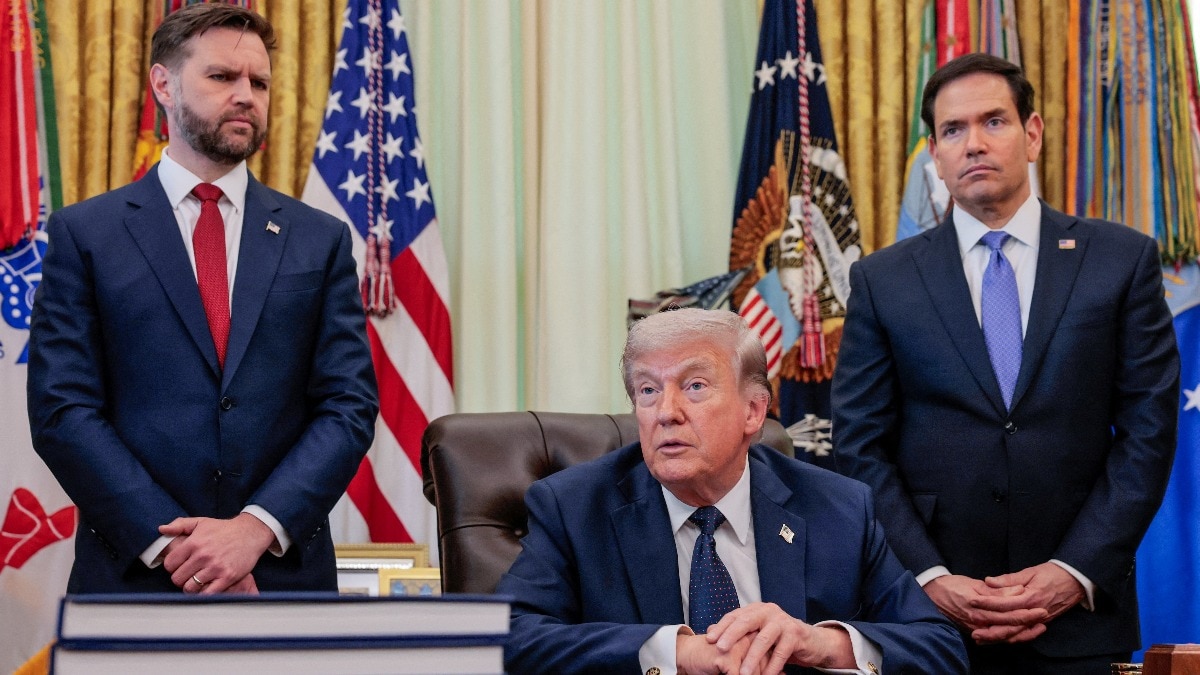
US Central Command said on social media that the American military had begun another round of strikes against Iran. "These strikes will continue imposing a heavy cost on Iranian forces and degrade their ability to attack innocent civilians and commercial shipping in the Strait of Hormuz," the US military said. Soon after, Trump described it as "another major attack" and told reporters in the Oval Office: "We're hitting them very hard. And it'll continue, and we'll see what happens. We're knocking out all of their offensive capability and we're controlling the straits. We're putting the blockade back."
Trump also said his administration now planned to charge ships passing through the strait, after earlier suggesting it would not do so. "We're protecting a very rich portion of the world," he said. "We're spending money. And so, what we've done is, we are going to be reimbursed for protection." Later, on social media, he wrote: "We are reinstating the THE IRANIAN BLOCKADE. All other countries will have fair and open use of the Strait." He added that the US would be "reimbursed" by 20 per cent of the value of cargo to cover "any and all costs necessary to do the job of providing safety and security". The move marks a shift from long-standing US policy that the strait should remain open to all without tolls, as it was before the US and Israel attacked Iran on February 28.
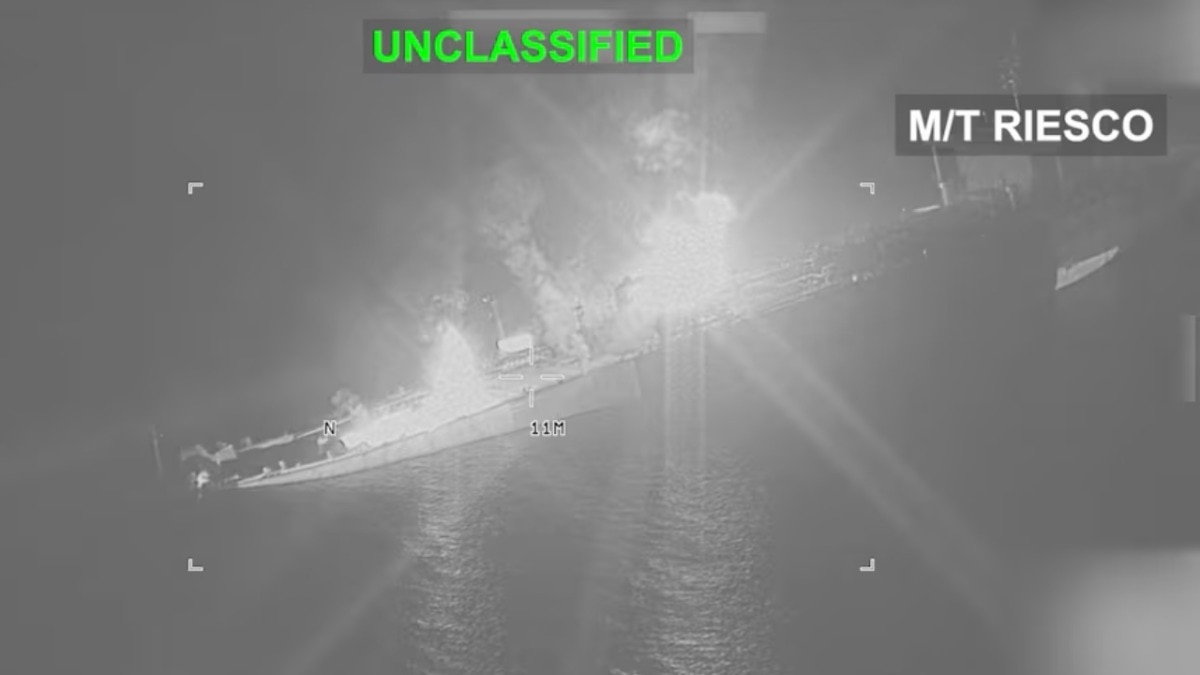
The UAE's Defence Ministry said early Tuesday that Iran fired two cruise missiles at the tankers Mombasa and Al Bahiyah in the Strait of Hormuz. The attack killed one mariner and wounded eight others. The ministry later said the dead was an Indian national and that the injured included six Indians and two Ukrainians. Both tankers caught fire, though the fires were put out. Iran's paramilitary Revolutionary Guard claimed responsibility, saying the vessels "ignored repeated warnings" and added: "They chose to pass through a minefield and were subsequently targeted and disabled."
The Emirati ministry said: "The UAE reserves its full right to respond to this escalation and to take all necessary measures to protect its territory, its citizens and residents." The Emirates had used similar language before launching attacks against Iran during the war. Fighter jets could be heard overhead in Dubai on Tuesday morning.
Bahrain also came under renewed attack early Tuesday as Iran retaliated over the latest round of US airstrikes. Bahrain sounded its missile alert siren and urged the public to seek shelter. There was no immediate word on any damage or casualties. Iran has maintained that it has the right to manage traffic through the strait and potentially charge fees under the interim peace deal, a position disputed by the US. The American military and the United Nations' Maritime Organization have tried to set up a route along the coast of Oman outside Iranian control, but Iran has attacked ships using that route, saying the US is violating the interim peace deal.
Earlier on Monday, Trump told conservative radio host Hugh Hewitt that the agreement reached last month was "built to test" Iran, adding that "when you're dealing with sleazebags agreements don't mean much". "They didn't honour the test," he said. Exchanges of fire in recent days had already raised fresh doubts over the interim peace deal, under which Washington had lifted a blockade it imposed in mid-April and the strait was to be fully reopened. The US military said it would resume its blockade of Iranian ports at midnight local Wednesday in Dubai.
The fresh US strikes, Iran's attacks on Bahrain and the UAE-linked tankers, and Trump's announcement on the blockade and shipping charges have together intensified the crisis in and around the Strait of Hormuz, with oil prices rising as the confrontation widens.
With PTI Inputs
- Ends
Published By:
India Today Web Desk
Published On:
Jul 14, 2026 07:44 IST