1 hour ago
The US struck fresh targets in Iran as Tehran said it was ready to return to the June ceasefire deal. The flare-up has sharpened regional fears after shipping incidents, military exchanges and fresh diplomatic manoeuvring.

Image used for representational purposes only

Dubai,UPDATED: Sep 1, 2026 23:36 IST
The United States said on Tuesday that it had struck new targets in Iran, as fighting resumed after about a month without military action. The latest flare-up came even as Iranian President Masoud Pezeshkian said Tehran was ready to return to the ceasefire deal reached with Washington in June if the US did the same.
The developments came amid wider tensions across the region, including reported attacks on ships in and around the Strait of Hormuz, an Israeli raid in Gaza City, the killing of an Islamic State spokesperson in Yemen, and fresh warnings from the United Nations over Yemen's worsening hunger crisis. Chinese President Xi Jinping also arrived in Cairo for talks with Egypt's leadership.
US Central Command said the new strikes followed what it described as recent attempts by Iran's Revolutionary Guard to target commercial shipping in the Strait of Hormuz and American service members deployed in the region. On Sunday, the US military said it had struck rocket launchers on Larak Island in the Strait of Hormuz. Iran then launched missiles at US sites in Jordan, which were intercepted, while the United Arab Emirates said it had stopped an Iranian drone over its waters.
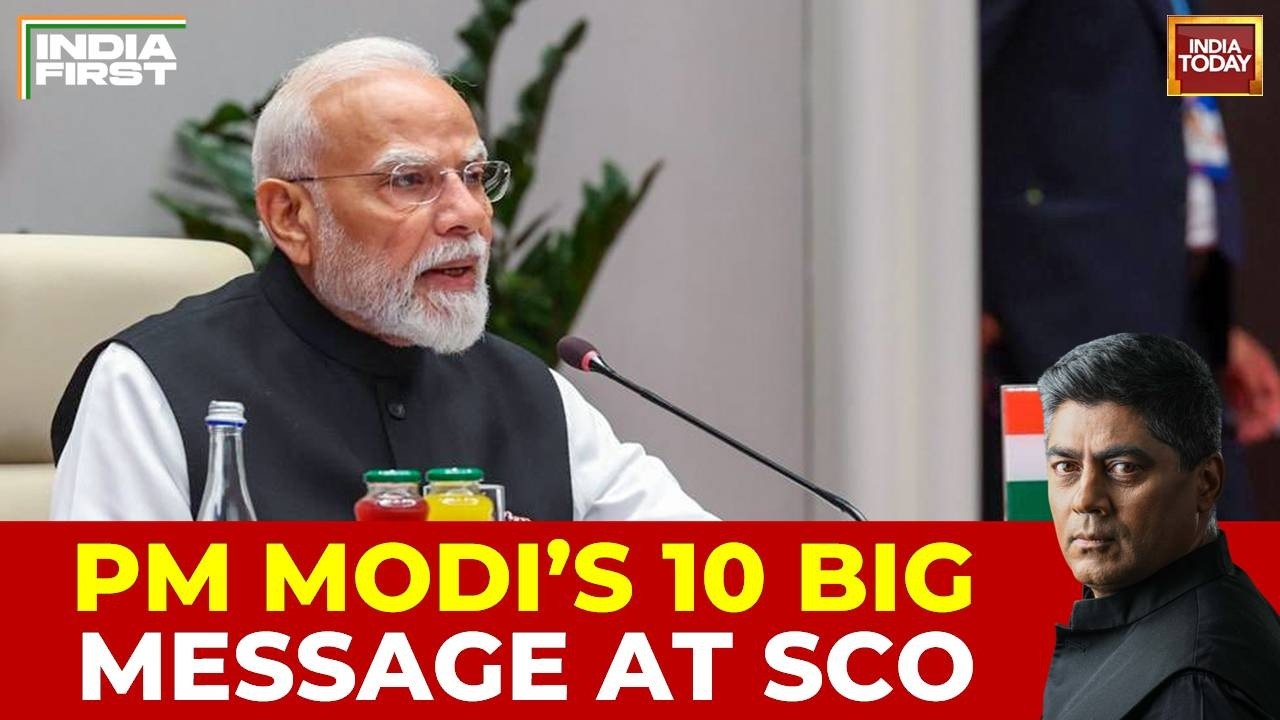
Before the latest US strike, Iranian state media quoted Pezeshkian as saying at the Shanghai Cooperation Organisation summit in Kyrgyzstan, "If the US returns to its commitments in the memorandum of understanding, the Islamic Republic of Iran will immediately reciprocate." The June memorandum of understanding had called for an immediate ceasefire and set a 60-day negotiating period for a broader peace deal. Under it, Iran agreed to clear mines from the Strait of Hormuz and allow ships to pass, while the US agreed to end its naval blockade, lift sanctions, issue waivers for Iranian oil exports and begin work on a reconstruction package for Iran. The agreement broke down quickly, though there had since been a lull in fighting despite exchanges of fire.
Iran has also been working with Oman on a framework to manage shipping traffic through the Strait of Hormuz, though it is not clear if the plan would be acceptable to the US. Other Gulf countries have called for the strait to be reopened without conditions. On Tuesday, Saudi Crown Prince Mohammed bin Salman met Oman's Sultan Haitham bin Tariq, according to the Saudi Press Agency, which said they discussed "ongoing efforts to maintain regional security and stability" without specifically mentioning the Strait of Hormuz.
US Treasury Secretary Scott Bessent said the Strait of Hormuz would be a "worthless piece of water in two years", saying shippers and other users of the narrow waterway would find other routes as they did less business with Iran. He made the remarks on the sidelines of the G20 in a conversation with Fox Business host Larry Kudlow. The Trump administration in August launched what it called "Operation Economic Outcast" against Iran to punish it economically and encourage other countries to do the same.
Iranian Parliament Speaker Mohammad Bagher Ghalibaf said on Tuesday that Iran controls the Strait of Hormuz. In a video posted on a state TV Telegram channel, he said, "The Strait of Hormuz is a place where at least 120 ships used to transit every 24 hours. Even if two or three ships manage to pass through on some nights now, that in fact shows that we have control over the entire Strait of Hormuz." He also said, "The information we have - open and covert, visible and hidden - shows us that after failing in the military and diplomatic arenas, the enemy has added a very broad economic war and cognitive war to its military campaign." Referring to what he called a hybrid war, Ghalibaf said, "The enemy's objective in this hybrid war is to create unrest and chaos inside the country. That is their malicious intention. ... Or they may try to force us to surrender through diplomacy. Never."
At sea, the British military's United Kingdom Maritime Trade Operations Centre said it had received reports of an attack on a ship in the Strait of Hormuz and another incident involving a nearby tanker. It said a tanker was hit by three projectiles on Monday while leaving the Persian Gulf through the strait east of Oman. In the second incident on the same day, it received a report "involving a tanker and military forces" off the coast of Oman, east of the Strait of Hormuz. There was no immediate claim of responsibility.
Elsewhere in the region, Israel said it had detained the head of Hamas' internal security in a special forces raid in Gaza City on Tuesday. Hospital officials said at least four people, including two children, were killed in the operation. In a joint statement, Israel's military and national security agency said the raid targeted the senior Hamas official. Prime Minister Benjamin Netanyahu said the detainee, whom he did not name, is "one of the most senior Hamas leaders" and had most recently been "engaged in efforts to restore Hamas's governance in Gaza."
In Yemen, state security said Islamic State spokesperson Abu Huzayfah al-Ansari was killed in a joint operation by Saudi-backed Yemeni government forces and Yemeni counterterrorism forces. A security statement carried by state-run SABA news agency said he was killed at dawn on Tuesday while hiding in a house in Seiyun city in Hadramout province. A US official, speaking on condition of anonymity because they were not authorised to comment publicly, said there was no US military involvement in the operation.
The United Nations food agency warned that any further escalation in Yemen could deepen the country's severe hunger crisis unless international actors stepped in. Carl Skau, acting executive director of the World Food Programme, told The Associated Press that rising global food prices were affecting "what is already one of the biggest humanitarian crises in the world". Separately, Xi arrived in Cairo on Tuesday for talks with Egyptian President Abdel-Fattah el-Sissi. Egypt said the two leaders were expected to discuss bilateral ties, ways to deepen "their strategic partnership" and regional and international developments. Taken together, Tuesday's developments showed the Iran conflict spilling into shipping, diplomacy and security across the wider Middle East.
With PTI Inputs
- Ends
Published By:
India Today Web Desk
Published On:
Sep 1, 2026 23:36 IST