1 month ago
Two powerful earthquakes struck Venezuela's northern coast within 39 seconds, killing more than 180 people and devastating La Guaira and Caracas. Scientists say the rare doublet exposes a complex fault zone and leaves the region bracing for dangerous aftershocks.

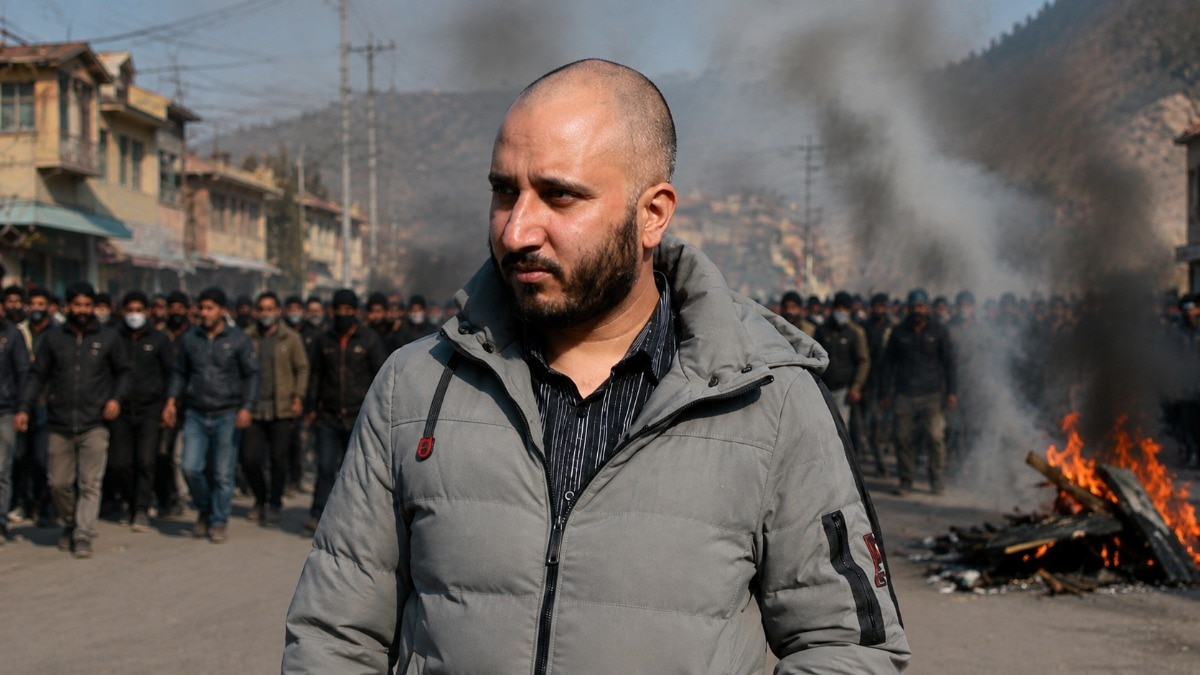
Stock photo used for illustration

Sanjuan,UPDATED: Jun 26, 2026 00:44 IST
Two powerful earthquakes that struck Venezuela's northern coast on Wednesday evening, killing more than 180 people, were part of what scientists call a "doublet". The first quake measured 7.2 and was followed by a 7.5 magnitude quake just 39 seconds later, according to the US Geological Survey.
The back-to-back quakes brought down buildings in Caracas and other areas, injured about 1,500 people and left thousands reported missing. Officials said the coastal region of La Guaira, north of Caracas, suffered some of the worst damage and casualties.
According to the USGS, doublet earthquakes happen when two quakes of similar strength strike close together in both location and time. Christine Goulet, director of the USGS earthquake science centre in California, told The Associated Press that while they are less common than the usual pattern of a main shock followed by smaller aftershocks, they can happen anywhere in the world.
She said doublets point to a complex fault structure, such as Venezuela's Bocono fault, which runs along the Venezuelan Andes for about 500 kilometres. A previous doublet of magnitudes 6.2 and 6.3 struck an area west of Caracas in September 2025, killing at least one person and injuring more than 100 others. Most of the damage then was reported in the towns of Zulia and Lara.
The two quakes this week were caused by a rupture along the boundary where the Caribbean and South American tectonic plates meet. The doublet occurred where the Caribbean plate, north of Venezuela, moves eastward relative to the South American plate at an average rate of 2 centimetres a year. "It's a large displacement," Goulet said. "It's on the order of the San Andreas fault." She said the movement was shallow strike-slip faulting, in which two blocks of rock slide past each other horizontally.
Goulet said that type of movement is not automatically more dangerous. "A more vertical motion can be more damaging," she said, adding that other factors, including the length of the rupture, determine the extent of the damage. David Naar, associate dean at the University of South Florida's College of Marine Science, said the boundary between the Caribbean and South American plates is less active than others.
USGS data showed that in the past century, only seven earthquakes of magnitude 6 and above have struck in the immediate area of the latest quakes, including the 2025 doublet west-northwest of them. Other individual quakes of magnitude 6 or higher hit in 2009, 1989 and 1975. The deadliest among them was a 6.6 magnitude quake in July 1967 that killed hundreds of people.
Jos Vitriago, who lives in Caracas, said he remembered the 1967 earthquake, even though he was 2 years old at the time. "Our house broke," he said in an interview with state-owned TV station Venezolana de Televisión. He said Wednesday's doublet "was horrible, horrible." According to the USGS, five earthquakes of magnitude 7 and above have occurred in northern Venezuela or near its coast since 1900. The most catastrophic was in March 1812 along the Bocono fault system, when an estimated 30,000 people were killed.
Scientists cannot predict earthquakes, but aftershocks are common after major events. The USGS said there is a 99 per cent chance of at least one magnitude 4 aftershock in Venezuela within the next week, and a 24 per cent chance of a magnitude 6 one. Unlike some other countries, Venezuela does not have an early earthquake warning system that uses sensors to detect the first waves of a quake. "It's very distressing that there was basically no time to evacuate," Goulet said. "That's extremely unfortunate."
The twin earthquakes have revived attention on Venezuela's history of destructive seismic activity, with scientists describing this week's disaster as a rare but known doublet event on a complex fault system, even as officials continue to deal with the deaths, injuries, destruction and the threat of aftershocks.
With PTI Inputs
- Ends
Published By:
India Today Web Desk
Published On:
Jun 26, 2026 00:44 IST