 1 month ago
He is revered for his extraordinary black-and-white images documenting conflict, humanitarian crises and the tougher side of postwar Britain.
But an exhibition of work by photojournalist Sir Don McCullin opening this week at the Holburne museum in Bath focuses on a very different subject: Roman sculptures.
The show, Don McCullin: Broken Beauty, features images of ancient statues photographed during trips around some of the world’s great museums.
They have not been seen before in the UK, and McCullin, 90, said this show – and one final trip to the Vatican to photograph more statues – would be his swansong.
He told the Guardian: “I’m too old to work now. After 60-odd years, I’m slightly tired of it all, really. I’m going to do this one last visit to the Vatican. And then I’m going to basically give up photography because I’m just simply physically too old. Your body, in a way, has the final say.”
McCullin’s fascination with Roman statues began when he travelled to north Africa with the writer Bruce Chatwin in the 1970s and was enchanted by Roman ruins there.
He said: “When Bruce died [in 1989], I was at a kind of crossroads in my life. I had this flashback of Bruce and me in this Roman town, so I rang my publisher and I said, I’d like to do a book about Roman cities. They didn’t seem very enthusiastic about the idea, but they gave me quite a small advance and off I went.”
McCullin visited more Roman sites in north Africa and a book called Southern Frontiers: A Journey Across The Roman Empire was published. He said: “I was so thrilled about doing the book because I stepped out of my safety zone.”
More recently, he has visited museums in the US and Europe, often visiting before or after public opening hours, giving him the space to study the statues.
His images of sculptures at the Holburne are hung alongside the work he is most famous for, such as soldiers and civilians in places struck by conflict, including Vietnam, Cyprus and Northern Ireland.
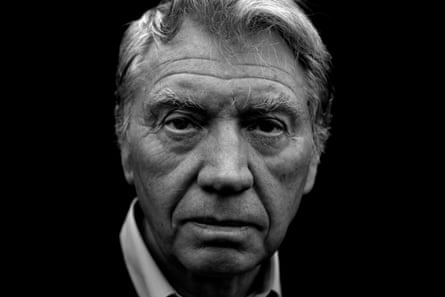
McCullin said he had never liked being labelled a war photographer.
“I’m a photographer the way somebody who would paint pictures would be called an artist. I went out of my way to show that I was capable of photographing the English landscape and objects of beauty. I haven’t stayed in one mindset. I’ve moved around with my thinking and I’m capable of doing all kinds of photographic things.”
One of the most striking features of the sculpture photographs are the jet black backgrounds. “I think it’s part of my soul, really. There’s a dark side of me because of the war and the tragedy.”
The director of the Holburne, Chris Stephens, said he was thrilled that visitors to the Bath museum would be the first to see the photographs.
He said: “Around them, we’ve got a constellation of his work representing his key projects. One of the things we want to emphasise is that however horrific the subject matter, he’s got this amazing empathy, and draws out the humanity of the people he’s photographing.”
Stephens highlighted the black backgrounds. “The black has a sort of almost physical quality. It’s actual ‘stuff’. The intensity of that black is phenomenal.”
He thought McCullin’s interest in the Roman empire was complicated. “It’s a reflection of the resilience of these things. They’re 2,000 years old and they’re still there, but they are in ruins and the sculptures are broken and damaged. They’re resilient but vulnerable and a reminder that civilisations come and go.”
As for McCullin, after his final Vatican visit, he says he will turn his attention to his garden in Somerset.
“I’ve got a wonderful garden here. I grew some dahlias last year and some tomatoes and I think I’m going to have another go this year and really expand my thrill of growing things.”
Don McCullin: Broken Beauty runs from 30 Jan – 4 May 2026