1 month ago
Last Updated:December 30, 2025, 07:00 IST
India-Pak conflict, Pak-Afghanistan clashes, and a dramatic regime collapse in Nepal have reshaped the South Asia's geopolitical landscape, marking a year of unrest.

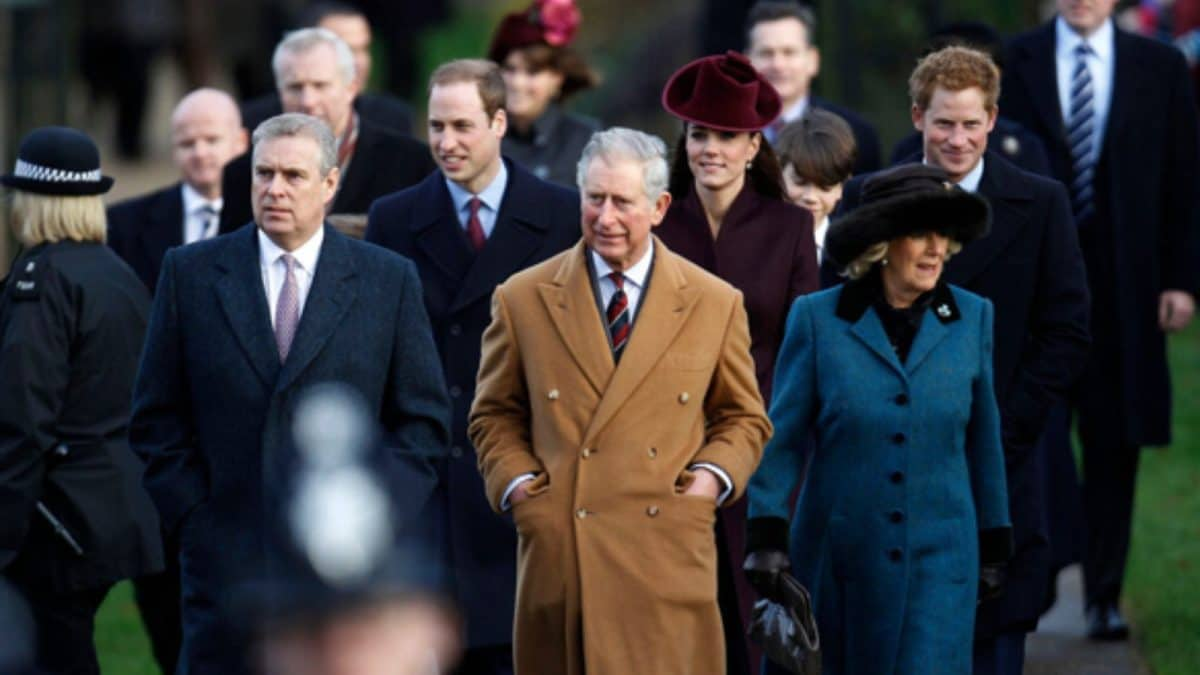
The turmoil seen in 2025 is not an isolated phenomenon. Over the past few years, South Asia has witnessed repeated waves of public revolt and political upheaval that have steadily eroded stability across the region. (Photos: PTI + AP)
While the war in Ukraine drags into its fourth year, US President Donald Trump has managed to enforce a fragile ceasefire between Israel and Hamas, a pause that brought relief to millions of Gazans who lived through 24 months of devastation.
The Middle East saw further escalation when Iran–Israel tensions resurfaced in June, prompting the US to strike three Iranian nuclear facilities under Operation Midnight Hammer. Meanwhile, Armenia and Azerbaijan signed a US-brokered peace agreement, ending decades of conflict.
But even as European and the Middle East conflicts dominate global headlines, a quieter yet dangerous churn has unfolded in South Asia, which has now emerged as one of the epicentres of global volatility in 2025.
A major military conflict between India and Pakistan, Pakistan-Afghanistan’s Taliban forces clashes, and a dramatic regime collapse in Nepal have reshaped the region’s geopolitical landscape, marking a year of unrest.
What’s Happening in South Asia?
India–Pakistan Conflict
In April 2025, India, the South Asia powerhouse, witnessed a terror attack in its northernmost territory of Jammu and Kashmir when Pakistan-backed terrorists targeted Indian tourists, mostly Hindus, killing 26 people in the scenic valley of Pahalgam.
India responded by suspending trade and placing the Indus Waters Treaty in abeyance, further isolating Pakistan on global platforms for supporting terrorism.
Two weeks later, on 7 May, the Indian Armed Forces launched strikes under Operation Sindoor, targeting terror camps in Pakistan, including Lashkar-e-Taiba and Jaish-e-Mohammad facilities.
Pakistan, having faced defeats in 1965, 1971 and 1999, retaliated the next night by firing on cities along the border, triggering a full-scale conflict between two nuclear-armed states.
Indian defence systems intercepted Pakistani drones and missiles, but casualties took place in border villages in Jammu and Kashmir due to heavy shelling by Pakistan Rangers. India responded swiftly by striking Pakistan’s air-defence systems and 11 airbases.
The three-day conflict ended following DGMO-level talks requested by Pakistan after India’s massive attack. But New Delhi has maintained that Operation Sindoor is still ongoing, hinting at further action if Pakistan does not curb cross-border terrorism.
India’s Prime Minister Narendra Modi has said that Pakistan’s actual intent behind the Pahalgam terror attack was to incite communal clashes in India.
Regime Collapse In Nepal
In early September, Nepal’s KP Sharma Oli government banned 26 social media platforms, claiming they were fuelling hate speech and misinformation. The ban ignited nationwide fury, led overwhelmingly by Gen-Z, who were demanding not just digital freedoms but an end to systemic corruption.
When security forces opened fire, killing over a dozen protesters, the demonstrations exploded. Within three days, the Oli government fell.
A new regime headed by former Chief Justice Sushila Karki took charge, marking one of the fastest political turnovers in Nepal’s recent history.
Pakistan–Afghanistan Conflict
In October, dozens of soldiers were killed in the deadliest Pakistan–Afghanistan border clashes since the Taliban seized power in Kabul in 2021. The fighting erupted a week after Pakistan conducted an air strike in Kabul targeting the head of the Tehreek-e-Taliban Pakistan (TTP). The Taliban responded by attacking Pakistani border posts, accusing Islamabad of violating Afghan airspace.
The TTP, an ethnic Pashtun group inspired by the Afghan Taliban, has targeted markets, mosques, airports, military bases and police stations across Pakistan in recent years.
After a week of fierce clashes, Pakistan and the Taliban government agreed to an “immediate ceasefire" brokered by Qatar and Turkey. However, sporadic exchanges continue, leaving the truce fragile.
Bangladesh Turmoil
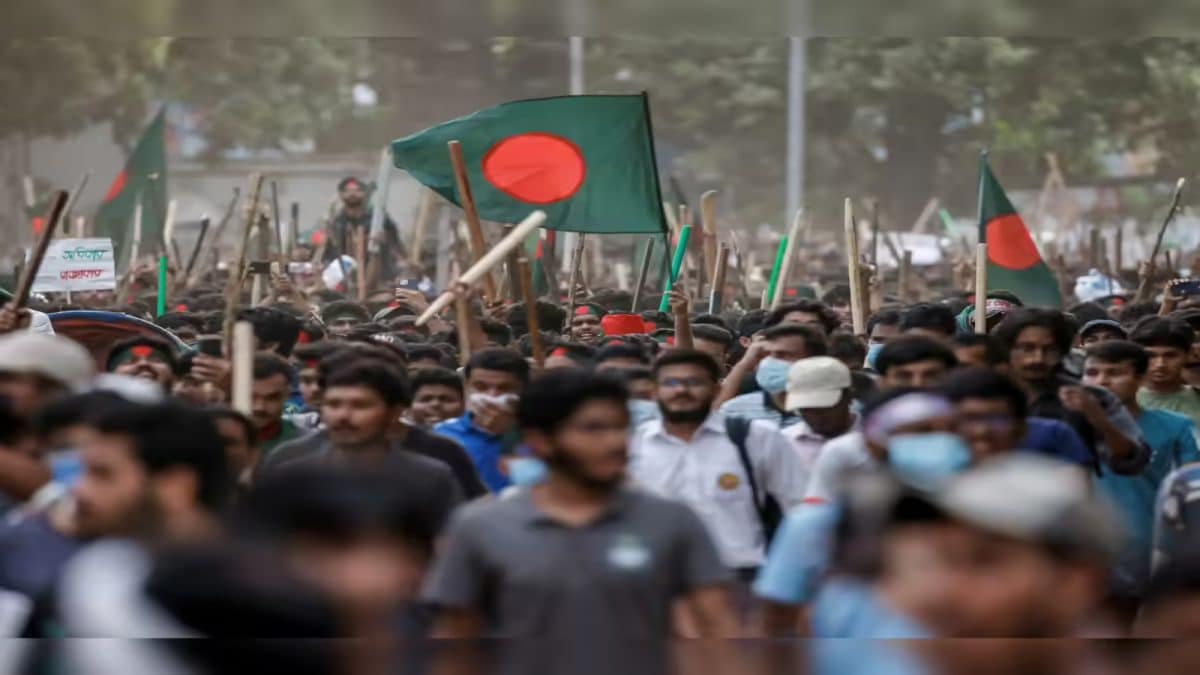
Bangladesh, which witnessed a bloody uprising in July 2024 that brought an end to Sheikh Hasina’s regime, now finds itself at a critical crossroads. Stability remains elusive under the interim government led by Muhammad Yunus.
The murder of student leader Sharif Osman Hadi—who rose to prominence during the July 2024 uprising—has triggered a fresh wave of unrest across the country. The violence has particularly targeted minorities, especially Hindus, just weeks ahead of the February 12 general elections.
Within two weeks of Hadi’s killing, two Hindu men—Dipu Chandra Das and Amrit Mondal—were lynched to death, heightening fears among minority communities.
According to a report by the Human Rights Congress for Bangladesh Minorities (HRCBM), at least 71 incidents linked to blasphemy allegations against Hindu minorities were reported between June and December this year.
The Yunus-led interim government has been accused of orchestrating Hadi’s murder as a pretext to delay the February 12 elections. Meanwhile, Sheikh Hasina’s Awami League (AL) has been barred from contesting the polls, clearing the path for the Bangladesh ist Party (BNP), which is widely expected to return to power.
Jamaat-e-Islami has also entered the electoral fray, forming an alliance with at least eight parties, including the Citizen Party—a political outfit created by students who played a key role in last year’s uprising.
Unrest Has Been Building For Years
The turmoil seen in 2025 is not an isolated phenomenon. Over the past few years, South Asia has witnessed repeated waves of public revolt and political upheaval that have steadily eroded stability across the region.
In 2022, Sri Lanka experienced massive protests that forced the powerful Rajapaksa family to flee the country as demonstrators stormed government buildings. Two years later, in 2024, Bangladesh saw a similar uprising when student-led demonstrations toppled Sheikh Hasina after decades in power. Hasina accused the United States of orchestrating her ouster following her refusal to permit a US airbase on St Martin’s Island, though Washington firmly denied the charge.
Then in 2025, Nepal became the latest flashpoint when youth-led protests against censorship and corruption brought down the KP Sharma Oli government.
Taken together, these episodes reveal a deeper and region-wide pattern of instability that has been building steadily across South Asia.
Why South Asia Matters More Than Ever
South Asia — particularly the Indian Ocean Region (IOR) — is among the world’s most strategically significant zones. The Indian Ocean carries enormous volumes of oil, natural gas, food, minerals and manufactured goods. It also connects the Middle East, Africa and East Asia to Europe and the Americas, making the region a backbone of global trade and supply chains.
China’s expanding presence in the IOR has raised concerns in India, which sees it as a direct threat to its maritime and national security interests. The United States also views the IOR as a critical geographic space for safeguarding global trade and counterbalancing China. Diego Garcia, part of the British Indian Ocean Territory, functions as a key logistics base for US forces.
With major powers seeking footholds in the Indian Ocean, unrest within South Asian nations could have the potential to reshape maritime security, disrupt global trade and shift geopolitical alignments.
First Published:
December 30, 2025, 07:00 IST
News india Yearender 2025: How South Asia Emerged As A Global Epicentre Of Volatility
Disclaimer: Comments reflect users’ views, not News18’s. Please keep discussions respectful and constructive. Abusive, defamatory, or illegal comments will be removed. News18 may disable any comment at its discretion. By posting, you agree to our Terms of Use and Privacy Policy.
Read More