3 weeks ago
Former US Security Adviser John Bolton has launched a scathing attack on US President Donald Trump over Washington's latest memorandum of understanding (MoU) with Iran, calling the decision to reach an agreement without resolving Tehran's nuclear programme "a big mistake". He argued that the provisions of the deal could ultimately strengthen the Islamic Republic politically and economically.
Speaking exclusively to India Today TV, Bolton described the agreement as "terrible diplomacy" that tilted overwhelmingly in Iran's favour while leaving several of Tehran's most contentious activities, including its nuclear ambitions, ballistic missile programme, regional proxy network and support for militant groups, largely unaddressed.
"I think that was a big mistake," he said when asked whether Washington had surrendered critical leverage by easing sanctions before the nuclear issue had been conclusively addressed.
"I think the ceasefire with Iran was a mistake. It allowed them to pull themselves up off the ground and pull themselves back together," Bolton said.
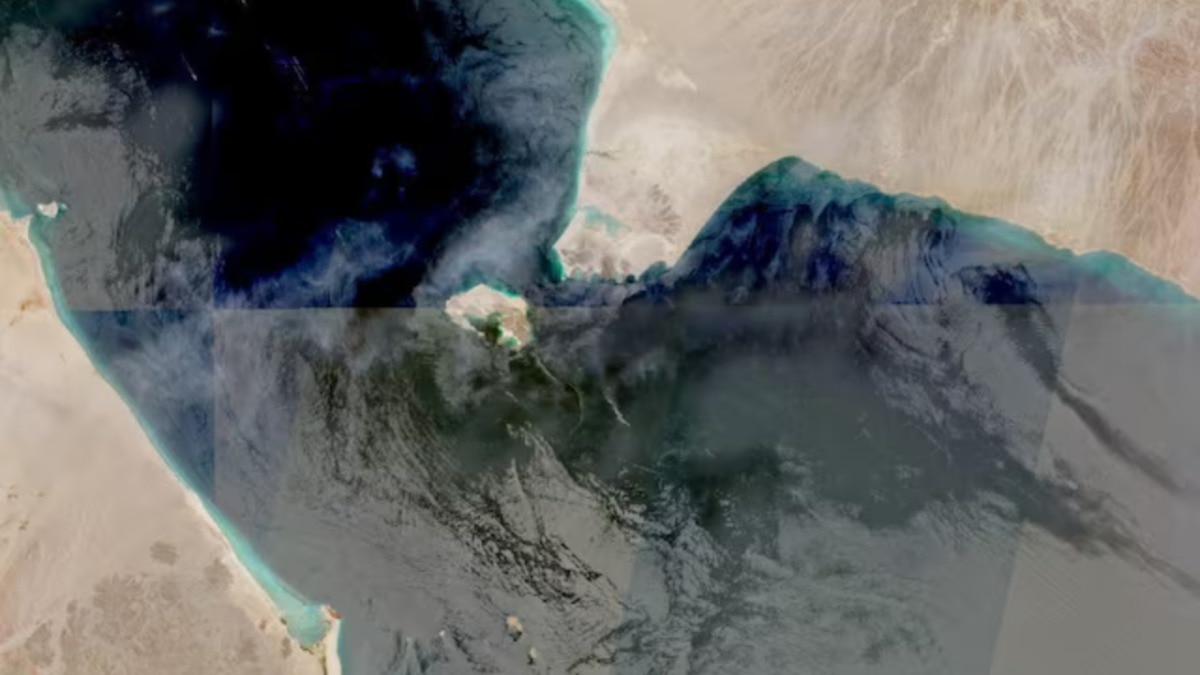
He argued that fears over Iran's threat to disrupt shipping through the Strait of Hormuz had driven Washington into accepting an agreement that overlooked broader strategic considerations.
"The use of the Strait of Hormuz to threaten the global economy ultimately overwhelmed Trump. He was worried about his own political situation domestically," Bolton said.
'TRUMP IGNORED STRATEGIC IMPLICATIONS'
The former US official added the Trump administration has focused narrowly on reopening the Strait of Hormuz and reducing global oil prices while ignoring the wider geopolitical consequences.
"It is clear just from listening to Trump and Vance that they were focused entirely on opening the Strait of Hormuz in order to get more oil on international markets and get the price of oil down... and didn't think about the strategic implications."
According to Bolton, the agreement failed to address several fundamental concerns.
"They didn't think about what it meant for the Iranian nuclear programme, its continued support for international terrorism, its threat to open and close the Strait of Hormuz like a light switch, or the people of Iran who continue to be repressed by this regime."
He concluded that "all of that really is on Iran's side at this point."
'IRAN EMERGES POLITICALLY STRONGER'
While acknowledging that joint US-Israeli military operations had inflicted serious damage on Iran's military infrastructure, Bolton argued that Tehran had nevertheless emerged politically stronger because of the agreement.
"I think a lot of damage was done" to Iran's military-industrial complex, nuclear facilities, air defences, air force and navy, he said.
However, he added that Iran had successfully leveraged the Strait of Hormuz crisis to extract concessions from the international community.
"It is not on the military side that Iran has become stronger, but on the political side because it's been able to take this really unacceptable violation of freedom of the seas... and use it as a form of economic extortion against the rest of the world."
Bolton also questioned whether Trump's expected economic gains from the agreement would even be realised, even as the deal is intended to restore shipping through the Strait of Hormuz and ease pressure on global energy markets. He argued that uncertainty remains too high for commercial shipping companies and insurers to fully resume operations.
"I think it's very unlikely that major shipping companies and the insurance companies are willing to send any substantial number of vessels back into the Gulf," he said, adding, "Even the economic benefits from the MoU that Trump has hoped for may not materialise."
'DEAL COULD HURT TRUMP'S CREDIBILITY'
Bolton further argued that the agreement would damage Trump's international credibility and embolden US adversaries, including China, Russia and North Korea.
Referring to the "TACO" acronym (Trump Always Chickens Out) that has gained traction among some critics, the former diplomat said the latest agreement reinforced that perception.
"I think that's how it will be read in Beijing and Moscow and Pyongyang."
"They'll see that if you can divert Trump's attention... whatever the broad American goals may be, Trump will always fall back on protecting his own interests first."
Bolton predicted that the agreement could ultimately prove politically costly for Trump himself.
"I think it will be politically damaging for Trump in probably not too distant future."
Bolton rejected suggestions that the agreement represented the beginning of lasting peace in West Asia, arguing instead that Iran would use the respite to rebuild its finances and military capabilities.
The US-Iran peace deal, formalised through a 14-point Memorandum of Understanding (MoU), establishes an immediate ceasefire after nearly four months of direct military conflict in West Asia. The agreement serves as a 60-day interim framework aimed at reducing regional tensions while the two sides negotiate a legally binding long-term peace treaty. The announcement also eased global economic concerns, sending oil prices lower and helping stabilise financial markets.
Under the agreement, Iran has reopened the Strait of Hormuz by lifting its naval blockade and clearing sea mines to restore toll-free commercial shipping, while the US has also dismantled its naval blockade. Tehran has reaffirmed that it will not develop nuclear weapons and will freeze its current nuclear activities, with both sides negotiating the future of Iran's highly enriched uranium stockpile during the 60-day period.
The MoU also provides for immediate US sanctions waivers to allow Iranian crude oil exports, followed by a phased lifting of primary and secondary sanctions and the gradual unfreezing of billions of dollars in Iranian assets. In addition, the framework outlines an international economic reconstruction plan worth at least USD 300 billion to help rebuild Iran's war-damaged infrastructure.
- Ends
Published On:
Jun 22, 2026 21:57 IST