1 month ago
In a rare and candid conversation from Tehran, Iranian researcher and social activist Dr. Sara Larijani tells India Today Global's Geeta Mohan why the world order is shifting, and where Iran and India stand in that change.
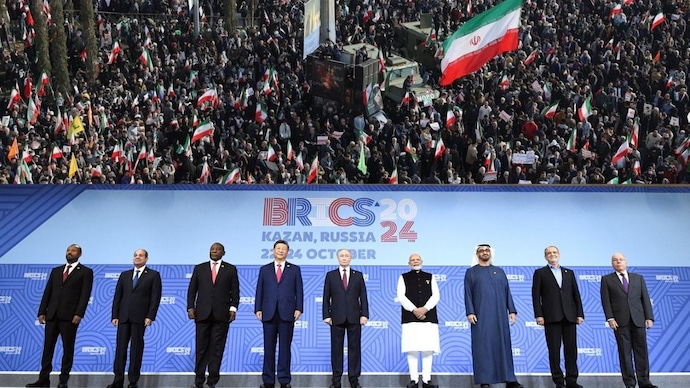
Dr. Larijani draws a direct line from the 19th century to the present, connects Iran's struggle to India's own history of colonial resistance
Bombs have fallen on Tehran. Negotiations are on a knife's edge. And yet, inside Iran, there are voices that speak not with fear, but with a striking, almost defiant clarity about where their country stands and where the world is headed. India Today Global's Senior Executive Editor Geeta Mohan travelled to Tehran to bring one such voice to the fore, in what is a rare, exclusive conversation recorded inside Iran at one of the most consequential moments in its modern history.
Dr. Sara Larijani is a postdoctoral researcher in political geography, a social activist and one of Iran's sharpest analytical minds on questions of sovereignty, imperialism and resistance. In this conversation, she draws a direct line from the 19th century to the present, connects Iran's struggle to India's own history of colonial resistance, and makes a case for why the Global South, including India and Iran, must build new alliances outside Western-designed institutions. What follows is that conversation, in her own words.
Q: If you look at the history of Iran, can you give us a perspective on why Iran has responded the way it has, and what do you think Iran is going to do next?
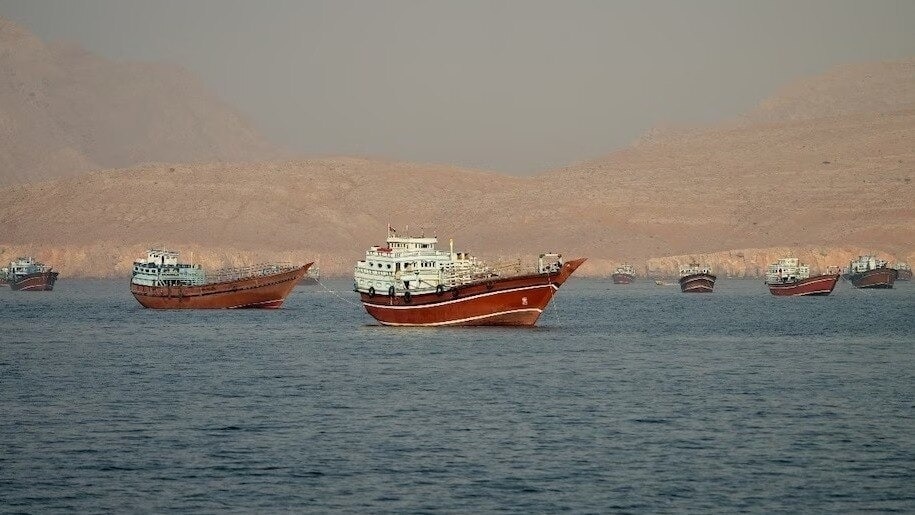
Dr. Sara Larijani: Since the 19th century, our history has been tied to India's history. When India was the jewel in the crown of British imperialism, Iran was there somehow. From that time, Iran's water bodies, like the Persian Gulf and the Strait of Hormuz, were of interest to the Western powers, and also Iranian resources like oil in the south of the country. But what happened, especially after the revolution, was that Iran took back its sovereignty and control over its resources. There was always this tension. It was portrayed as a political or ideological adversary, but in depth it was, in my view, a fight for sovereignty, from a Global South nation like Iran against Western imperialism, which, since the 1950s, we can call U.S-led imperialism.
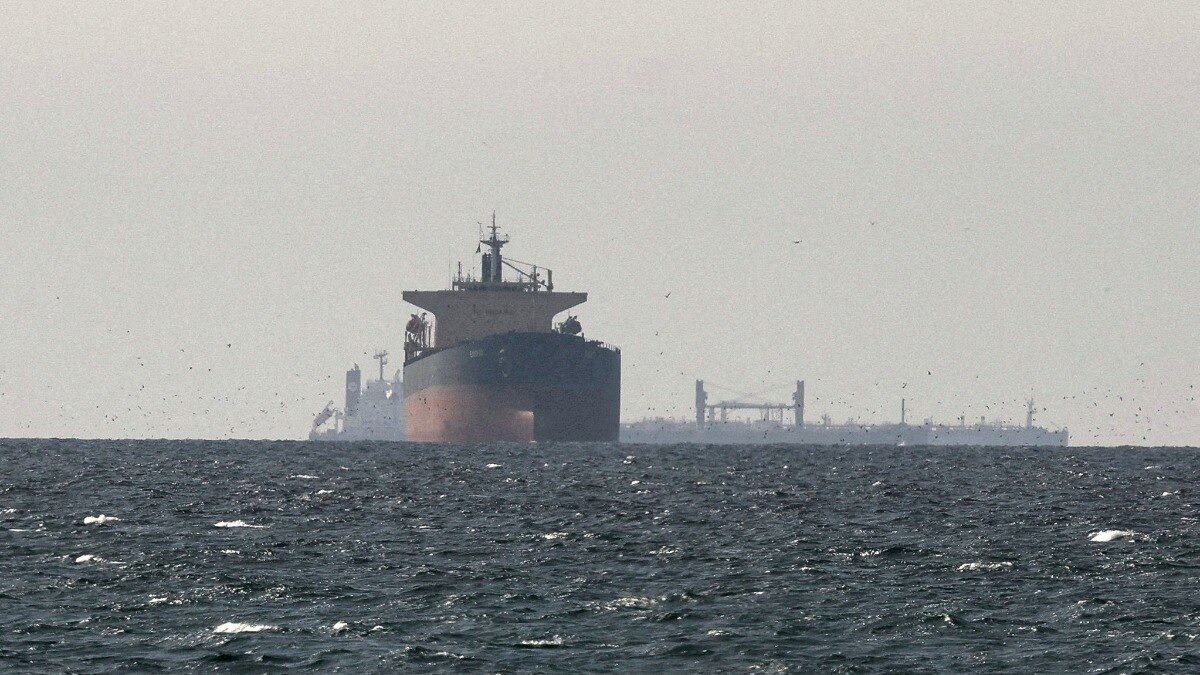
To be honest, I myself did not believe that Iran could defend the Strait of Hormuz in the way that its military forces are doing. I think no one expected that Iran could somehow take back control of the Strait of Hormuz the way the country is doing. It is not only that we are taking back a part of our water corridor, which is a choke point for oil, for gas, and a lot of other oil-related commodities. It is also a transfer, in my view, of international power relations. We have witnessed the rise of China since the beginning of the 21st century, and then, especially with the height of the Ukrainian war, we see the rise of Russia into this world order changing, and now we are witnessing that Iran is also entering.
Q: Are we looking, with this war, at a new, changed world?
Dr. Larijani: I believe so. It has already started, in two or three decades, the decline of the American economy, the decline of its power in discourse, and also in international law. What we have witnessed, especially after October 7, was that the UN, and more specifically the Court, failed to act on its own jurisdiction. These organisations, the UN and all other associated organisations, were West-centred, and they still are.
People like me were saying this, that for the countries of the Global South, like Iran and India, we need more power in these organisations, in voting, in having a say. The U.S. supporting Israel, and Europe supporting Israel since October 7, was an eye-opening moment that this international order, with all these institutions, is not in the favour of peoples of the Global South. This is a fact today. This is not some analysis. This is something that people have witnessed.
Another point is the rise of the Chinese economy, and how almost every country on Earth is dependent on Chinese production and equipment. We are also witnessing the delinking of Europe from the U.S., which was quite firm after the Second World War. I see this moment as a continuation of all the resistance movements and revolutions against colonialism and imperialism, including India's independence and its aftermath, revolutions in Cuba, Venezuela, and Iran in 1979.
Q: Do you think the Trump administration was ill-advised, or did it underestimate Iran?
Dr. Larijani: Both. Many analysts of Iranian society, those who study in Middle Eastern study centres and teach at universities in the West, try to understand Iran through the lens of Eurocentric theories. How Iranian society works was put into concepts and theories created to define European societies. If you study all this literature, there is nothing about the people you may have seen on squares, streets and in queues. The people of those studies are the western people in this country. All those studies underestimated the Iranians who are gravely tied to their Iranian and Islamic roots.
And ill-advised because of what happened in January. According to many Western outlets, that was orchestrated to create the image of the Iranian state as weak and on the verge of collapse. The American press usually calls it a plot by Mossad and Israel. I, as a researcher, did not have access to that data, so I cannot say which organisation was involved. But that moment was created as a stage of war to somehow persuade the American government to intervene and be part of this war earlier than planned. So both. Underestimated and ill-advised.
Q: Has this war united the people more than Trump and Netanyahu would have ever imagined?
Dr. Larijani: What we can call a united nation happened after the 12-day war in May and June. That was the moment you could really feel and see in society that people are united behind their state. But what happened in January, which I call the second stage of war, created a huge divide in our nation. It is not yet back to the situation we had in, let's say, summer 2025. But one thing is absolutely clear. Thinking that bombs and the U.S. military machine and Israeli assassination plots would bring freedom and prosperity is completely, 100 per cent shattered for all layers of Iranian society.
Q: How can any country fight an entire people who are ready to die? What is this concept of martyrdom in Iran that you hold so dearly?
Dr. Larijani: The Martyrdom is closely tied to the idea of being proud, of your nation, your land, your religion. And being on the right side, the credibility of what you are saying and what you are doing. This is very important to this nation, and I believe also for many others in Lebanon, Iraq and Yemen. This has a very direct tie to Shia Islam and the martyrdom of Imam Hussain. And this has become a ritual not only for firm believers, but for many Iranians who you, as an Indian woman, may consider non-Muslim. Imam Hussain rituals are in their hearts. They cry for a man with 72 people who, because he was on the right side, fought to the last person without water in a very difficult situation.
Every Iranian, even those now chanting for Pahlavi on U.S. streets, has this inside. If you look at their rituals, now that they are trying to do in Los Angeles, they are mimicking the Ashura rituals on the streets of LA. Some historians of the Sassanid era believe part of these rituals that Shia Islam now practises existed before Islam in Iran. So this has really deep roots in Islam and Iranian culture.
I was also on the squares during the nights we heard bombing in Tehran. It was that moment I understood this. You hear bombs, the next one may fall in that very square where you are chanting. And it is just like, I still remember that moment, I stand here, and I die for the right cause. It is difficult to explain how it is rooted in our logic, our world view. It is not about being sentimental. It is woven into our logic of viewing the world, understanding the world and changing the world.
Q: With all the intelligence that Israel and America have, they missed out on the will of the people. Is breaking the will of the people the biggest challenge right now?
Dr. Larijani: That is true, and they are actually trying. They have tried this for decades through satellite TV channels in Farsi, to infiltrate. I call it the 'Westoxification', according to Jalal Al-e-Ahmad, that feeling of inferiority that was always the method of colonialism and empire. In the last two decades, there have been Iranian news channels on satellite, very expensive projects, running 24 hours. And then there were movies to push a way of life. Western, consumerist, individual values. And also social media, and online games. I was watching one where you, as the player, are an American soldier saving the people of Iran, Russia and China from tyranny.
All of this came to a point where we witnessed a moment of clarity in June. Oh, this is the U.S., this is Israel. They are bombing us while we were at the negotiation table. This is a moment you cannot gloss over with liberal and human rights or humanitarian intervention talk, for an Iranian being in Iran. Since that moment of clarity, the will grew. The will to defend the land, to defend the state, and to defend the way we are.
Q: Will Iran and Iranians ever trust America and Israel?
Dr. Larijani: Israel, never. The majority of Iranian society understands Israel as a settler, colonial entity in our region, with no respect for the lives of its indigenous people. So, no.
The U.S., it depends. It depends on how things develop in the future. But at the moment, as Iranian state officials are saying, there is no trust. Two times, Iranians were at the negotiation table and they literally started a war against the country. If we forget what happened after the JCPOA, and how Trump decided unilaterally to walk out of the deal, the experiences of the last year are going to stay deep inside the Iranian consciousness and will affect Iran's diplomacy as well.
Q: Do you hope and pray for peace and for Iran to be free of sanctions?
Dr. Larijani: Iran will be a country which is not sanctioned, but not through negotiations with the U.S. and its allies, but through building alliances in the Global South and with countries that are changing the balance of the Western-led global order. What I hope for is building alliances with BRICS countries, with countries we are already with in Shanghai. I believe what happened has opened the eyes of many in Africa, Asia and South Africa.
What I hope for is that these countries build economic partnerships, corridor partnerships, resource-related partnerships that are outside Western-designed organisations and routes. Iran and India could have relations in the BRICS or in Riyadh. Iran and China can have relations in Riyadh or through the Yuan. All of this can help Iran to somehow break the chains of the unilateral sanctions and secondary sanctions that the U.S. has imposed on Iran in recent years.
Dr. Sara Larijani spoke exclusively to India Today Global's Senior Executive Editor Geeta Mohan in Tehran, Iran.
- Ends
Published By:
indiatodayglobal
Published On:
May 9, 2026 16:18 IST