1 month ago
Last Updated:March 02, 2026, 12:09 IST
Ballistic missiles travel at extremely high speeds, measured in Mach which is equivalent to the speed of sound


A member of Iranian Revolutionary Guard speaks on his walkie talkie while Zolfaghar surface-to-surface ballistic missiles are displayed in an annual pro-Palestinian rally marking Al-Quds (Jerusalem) Day in Tehran, Iran, in 2017. (AP File)
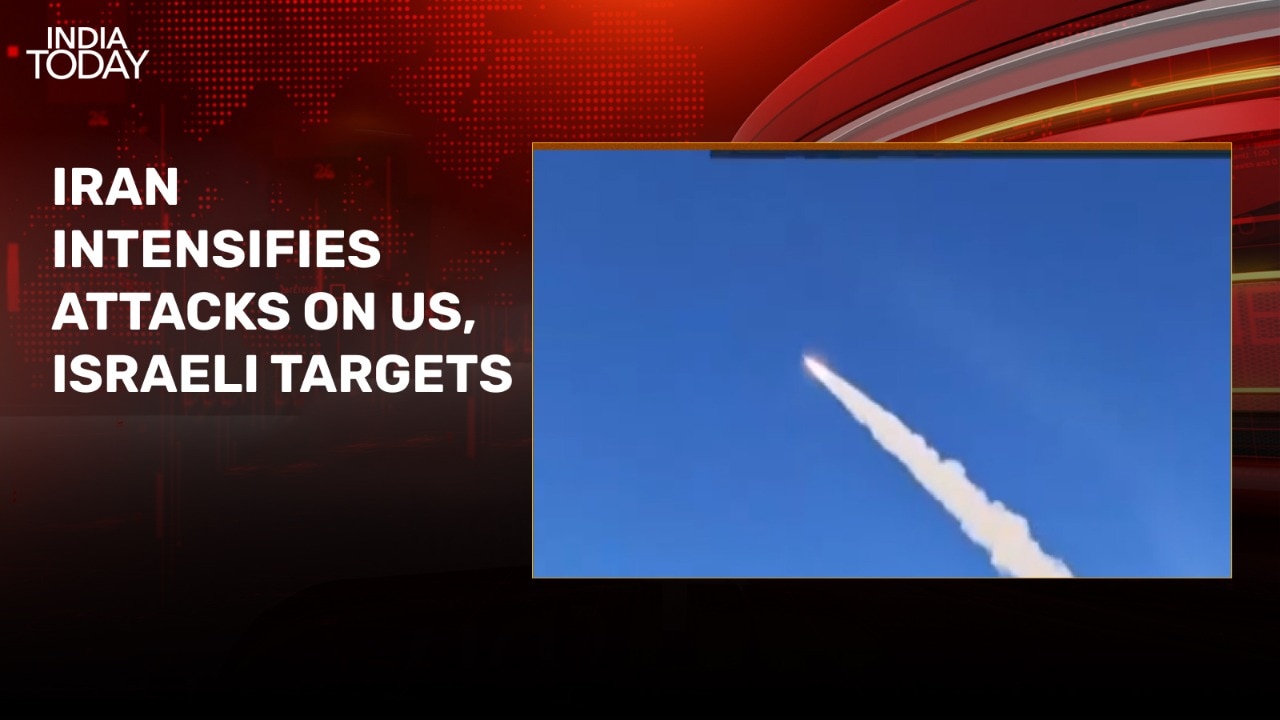
Iran has launched a major retaliatory ballistic missile campaign across the Middle East. This follows a massive joint military strike by the United States and Israel that reportedly killed Iran’s Supreme Leader, Ayatollah Ali Khamenei.
How long does it take for Iran’s ballistic missile to reach Israel? News18 explains
IRAN’S COUNTER
Iran has fired missiles at Israel, the UAE, Qatar, Bahrain, Kuwait, Jordan, Saudi Arabia, and Iraq.
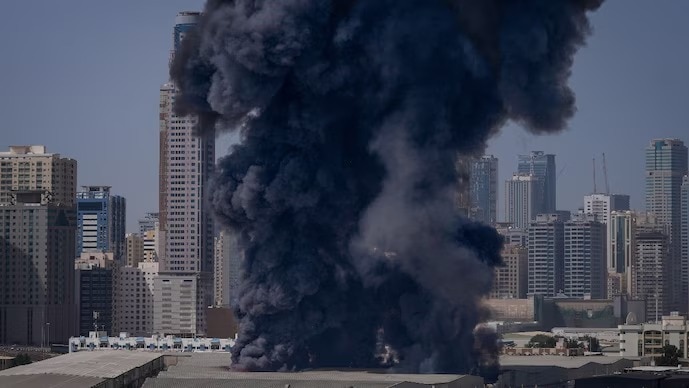
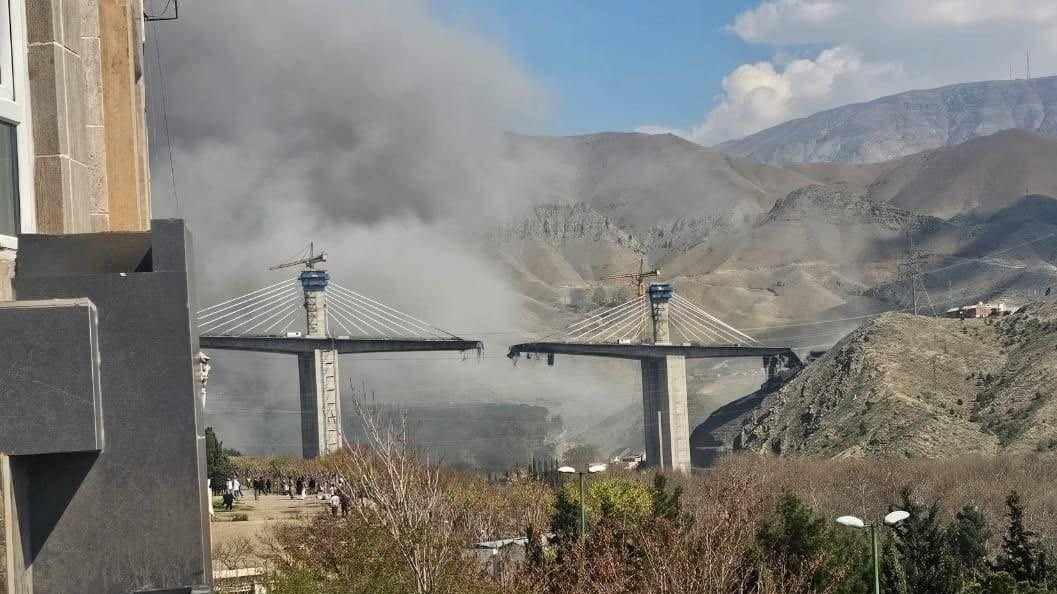
UAE: At least 165 ballistic missiles were fired toward the UAE. While 152 were intercepted, debris and drone strikes caused casualties and damaged landmarks like the Palm Jumeirah and Dubai Airport.
Israel: Approximately 550 ballistic missiles have been launched at Israel since the conflict intensified. A deadly strike in Beit Shemesh killed nine people on March 1.
U.S. Assets: Iran targeted the U.S. Navy’s 5th Fleet headquarters in Bahrain and the Al Udeid Air Base in Qatar. Reports also indicate four ballistic missiles were fired at the USS Abraham Lincoln.
Kuwait: Authorities reported intercepting 97 ballistic missiles.
In Israel, at least 28 people have been killed and over 3,000 wounded over 12 days of conflict. In the UAE, three people were killed and 58 injured. Significant damage has been reported to civilian sites, including luxury hotels in Dubai and residential buildings in Bahrain and Israel.
WHAT ARE BALLISTIC MISSILES?
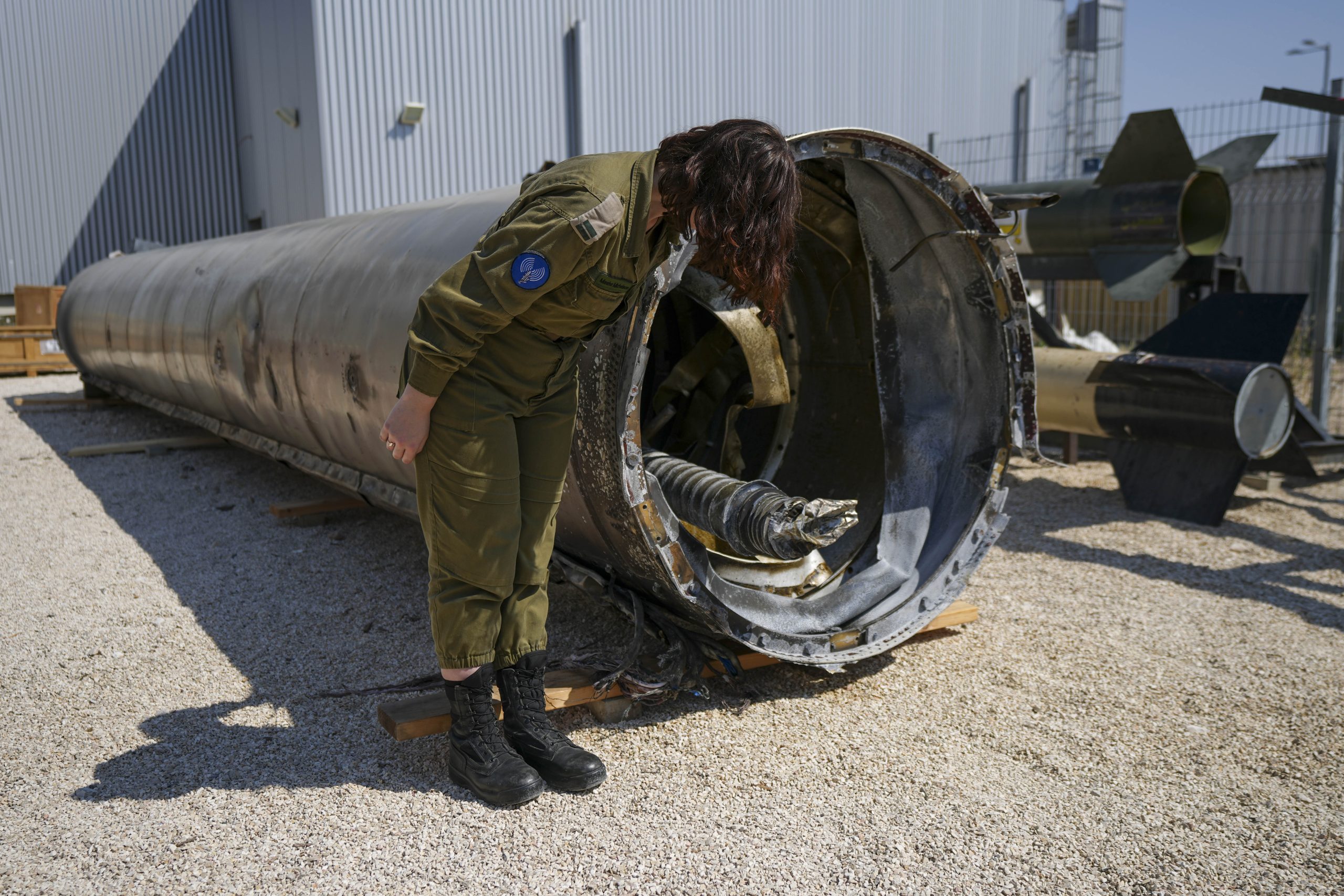
Ballistic missiles are projectiles that follow a ballistic trajectory to deliver one or more warheads to a predetermined target. They are powered and guided during the initial phase of flight, but then follow a free-fall path under the influence of gravity for most of their journey.
THE TYPES
Battlefield range ballistic missile (BRBM) – less than 200km (124 miles)
Short-Range Ballistic Missile (SRBM): < 1,000 km
Medium-Range Ballistic Missile (MRBM): 1,000-3,000 km
Intermediate-Range Ballistic Missile (IRBM): 3,000-5,500 km
Intercontinental Ballistic Missile (ICBM): > 5,500 km
HOW DOES A BALLISTIC MISSILE TRAVEL?
The missile has three main phases:
Boost phase: During this, the missile is launched using powerful rocket engines. It ascends rapidly, usually reaching the edge of space. This phase lasts a few minutes. The missile is guided while the engines are firing.
Midcourse phase: After the engines shut off, the missile coasts through space. It follows a curved, arcing path — like a thrown ball. If equipped with MIRVs, multiple warheads are released here. This is the longest phase (can last up to 20 minutes for ICBMs).
Terminal phase: The warhead re-enters the atmosphere. Gravity pulls them down at extreme speeds. The missile is no longer powered — it’s just falling, guided by its momentum. This phase takes less than a minute.
WHAT DOES IT CARRY?
A ballistic missile can carry conventional or nuclear warheads. Some are equipped with Multiple Independently targetable Reentry Vehicles (MIRVs), allowing one missile to hit multiple targets.
HOW ARE THEY LAUNCHED?
From land using silos or mobile launchers
Through submarines
From air, which is not common
HOW FAST DOES A BALLISTIC MISSILE TRAVEL?
Ballistic missiles travel at extremely high speeds, measured in Mach which is equivalent to the speed of sound. ICBMs can exceed Mach 20. Shorter-range ballistic missiles reach supersonic speeds (faster than Mach 1, or about 1,225km/h or 761 miles per hour), while others, usually longer-range missiles, can travel at hypersonic speeds – greater than Mach 5 (6,125km/h or 3,806mph)
HOW IS A BALLISTIC MISSILE DIFFERENT FROM CRUISE OR DRONES?
A ballistic missile is launched into the upper atmosphere and follows a high, arcing path under the influence of gravity, reaching very high speeds and typically used for long-range or strategic targets. A cruise missile flies at low altitudes like an unmanned aircraft, is guided throughout its flight, and is designed for precision strikes over medium to long distances. A drone, or unmanned aerial vehicle (UAV) is remotely or autonomously controlled, usually slower, and used for surveillance or targeted attacks, often with the ability to loiter over an area before striking.
HOW LONG DOES A MISSILE TAKE TO REACH ISRAEL FROM IRAN?
Ballistic Missiles: Approximately 12 minutes. These missiles follow a high-velocity, arcing trajectory and are among Iran’s most potent delivery systems.
Cruise Missiles: Around 2 hours. They travel at subsonic speeds and can be launched from various platforms, including land-based sites and aircraft.
Drones: Approximately 9 hours. Iran has developed long-range drones capable of carrying out surveillance and strike missions over extended distances.
CAN THEY BE INTERCEPTED?
Ballistic missiles may vary in range, but all operate on the same basic principle. Since ballistic missiles travel through the air for a significant duration, radar systems can detect their launch early. This allows for the calculation of their likely impact point, enabling the launch of anti-ballistic missiles to intercept them mid-flight. When a ballistic missile begins its descent, it drops like a stone under the influence of gravity, with none of its rocket motors active for manoeuvring. This makes it impossible to spoof or divert. However, it can still be intercepted using a well-timed anti-ballistic missile.
The speed of a hypersonic missile, which can reach around 6173 kilometres per hour, makes interception nearly impossible with existing systems. The aerial distance between Israel and Iran is approximately 2,000 kilometers. Some missiles can travel at speeds up to Mach 10—ten times the speed of sound—posing a significant challenge to air defence systems. Intercepting a hypersonic missile would require either a hypersonic air defence system or a faster interceptor missile capable of speeds between 10 and 25 Mach, neither of which are currently available. A single supersonic interceptor missile is insufficient to engage targets moving at hypersonic speeds.
HAS IRAN USED BALLISTIC MISSILES IN THE PAST?
Iran has a history of using its ballistic missile arsenal—the largest in the Middle East—for direct strikes:
October 2024: Iran fired approximately 200 ballistic missiles at Israel (Operation True Promise II).
April 2024: Iran launched roughly 120 ballistic missiles toward Israel.
January 2020: Iran targeted U.S. bases in Iraq (Ain al-Assad) with ballistic missiles following the killing of Qassem Soleimani.
With Inputs From Agencies
First Published:
March 02, 2026, 12:08 IST
News explainers Iran To Israel In 12 Minutes: The Trajectory And Power Of Ballistic Missiles Explained
Disclaimer: Comments reflect users’ views, not News18’s. Please keep discussions respectful and constructive. Abusive, defamatory, or illegal comments will be removed. News18 may disable any comment at its discretion. By posting, you agree to our Terms of Use and Privacy Policy.
Read More