1 month ago
Greens senator says ‘immoral’ NDIS reforms are being rushed through Senate

Ima Caldwell
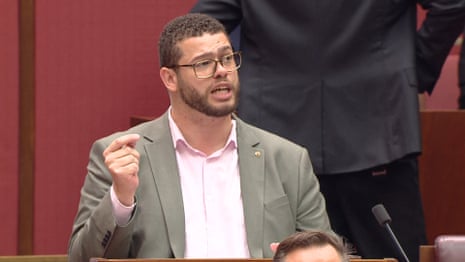
In an impassioned speech to the Senate, Greens senator Jordon Steele-John said the federal budget’s NDIS cuts are “immoral” and being rushed through the parliament. He put forward an amendment for the bill go to an inquiry that would see a report in August and provide a “sensible amount of time to engage disabled people”.
Steele-John said:
This is outrageous and it is wrong. Fellow senators, this is wrong. These cuts are immoral. This is not what you were elected to do, to cause this harm to cause this pain, to put these lives at risk …
Many in this place may not have a lived experience of disability. But I do hope that the majority of us have not lost our capacity for empathy, and our commitment to curiosity, and a belief that we should understand the laws that we are passing … And the impacts that they will have on people.
160,000 people now face removal from the NDIS.
The amendment failed.
Key events Show key events only Please turn on JavaScript to use this feature
Butler justifies cutting private health insurance rebates for over-65s
Independent MP, Rebekha Sharkie, is next and says that pensioners in her electorate who have been hit with the removal of private health insurance rebates, will see their premiums soar “by up to $1600 for a couple”.
The change was announced by the health minister, Mark Butler, last month alongside changes to the national disability insurance scheme and were included in Tuesday night’s budget.
Butler disputes the figure that he says has been “bandied about”, and that the change will increase private health insurance fees somewhere between $230-$250 per year.
We don’t think there is a strong policy rationale to pay different Australians different levels of support for private health insurance when they are on the same income simply because of age.
If there are two households next to each other on the same income, one household working age, raising kids, taking up private health insurance, we don’t see any rationale for paying them a lower level of support than a household next door that happens to be on the same income but of an older age.
Coalition puts the spotlight on migration numbers
Labor is 77,000 homes behind on its 1.2m home target, while 1.4 million migrants have entered the country since Anthony Albanese became prime minister, says s MP Alison Penfold, and asks where the government is housing all the migrants.
It’s not a surprising line of questioning – with the opposition leader, Angus Taylor, to focus on restricting immigration in his budget-in-reply address tonight.
The prime minister says the government is “throwing everything” at its housing targets, and introduced measures like forcing universities to build additional accommodation for international students (which he says was opposed by the Coalition).
He doesn’t engage on the migration numbers, and focuses on increasing supply, and levelling the playing field to enter the housing market. The budget also includes an extension on banning foreign investors from buying homes.
Albanese says:
The shadow treasurer said that the current system, to quote him, “favours well-off established interests against those trying to get ahead”.
Mr Speaker, we want people to get ahead we want people to be able to live with the security of their own roof over their head.
s MP Anne Webster is up next and says 40,000 nurses, 38,000 teachers, and almost 10,000 police officers have negatively geared properties – so why is the PM pulling up the ladder on them when he’s been climbing it himself?
Anthony Albanese says he disagrees with the premise of the question, because all those teachers, nurses and police officers can continue to negatively gear their properties. They can also negatively gear more properties if they buy new dwellings.
He adds that the policies will help younger emergency and frontline workers who aren’t in the property market compete with fewer investors to buy their own homes.
People go out there and they invest in investment properties in order to increase their assets and their wealth during their lifetime. Good on them …
Not by having investments hidden behind trusts, not by having investments through the Cayman Islands, but by investing here in properties here and we encourage that and celebrate that.
Liberal MP Tony Pasin booted from chamber
Why do 20 out of the 23 cabinet ministers that own more than two homes get to keep negatively gearing those properties, but young people wanting to get into the market can’t, asks Liberal MP Simon Kennedy.
Anthony Albanese turns the question back to the opposition, asking why Angus Taylor didn’t ask the question, instead of the “new kid” Kennedy. A quick look at Taylor’s register of interests shows he has two family trusts, and owns one property with his wife, who also owns an additional property.
The PM – famously – bought a $4.3m home with his new wife, Jodie Haydon, on the Central Coast, for “down the track”, he says.
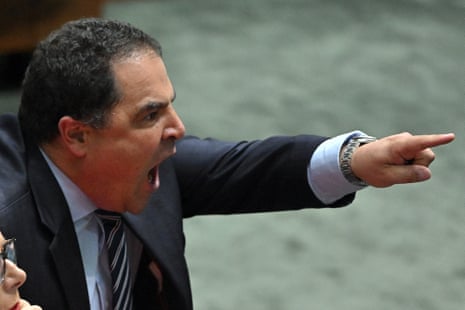
There’s a bit of a scuffle as the PM says something unparliamentary which causes the House to erupt. Liberal MP Tony Pasin shouts at the PM to withdraw it (we didn’t hear what Albanese said), but Pasin’s interjections see him promptly kicked out of the chamber.
Albanese then withdraws, and continues with an attack on the Coalition’s line of questioning:
It is extraordinary and shows their failure to actually have any legitimate criticism of our policy that they chose to go down this road.
When will Australia get a gas export tax?
Over to the crossbench, independent Sophie Scamps asks the prime minister why the revenue promised by the petroleum resource rent tax is always “around the corner” and isn’t ramping up, and if the government will tax gas exports.
Anthony Albanese says that right now the government is focused on fuel, and that gas companies are already paying tax through a range of mechanisms.
Indeed the budget on Tuesday night, contrary to the suggestion in the member’s question, PRRT revenue was revised up by $1.6bn in this budget.
A bit of context here – the PRRT actually brought in $100m less money than forecast in the last financial year, but saw a small revise upwards in the forecasts for PRRT take over the forward estimates compared to the last budget.
The PRRT (bearing in mind that it’s not the only tax mechanism) still only reclaims just over half the revenue that the beer excise does.
Albanese continues, saying that Australia is a reliable international gas partner, and that the east coast gas reservation scheme will help keep domestic gas prices lower.
We will introduce the domestic gas reservation scheme, so more Australians’ gas stays in Australian homes and businesses and I note as well the gas prices are down, not up at the moment.
We’re engaging with our partners in the region and we honour of course our existing export contracts because that is the way that you engage in international trade. If you don’t do that, then it comes back certainly to bite you.
Labor ‘misled, deceived, untruthed’ Australians, shadow treasurer says
Tim Wilson is up next and again accuses Labor of lying – but speaker Milton Dick isn’t having it, and tells the opposition to use a different word.
Dan Tehan stands up with rules in hand, and says the use of the word is being directed to the party, not an individual (which would be unparliamentary).
We’re into the semantics here – bear with me. Dick counters and says he’s now done his “own research”, and argues that the question should be rephrased. Tehan says that previous speakers have allowed it, and hits Dick with “but it’s actually true”.
Dick makes a final call to say that Wilson can’t say Labor lied. So the shadow treasurer gets out the thesaurus:
Labor misled, deceived, untruthed Australians about plans to tax them more. Will the prime minister rule out changing his mind about introducing a death tax?
From the Coalition benches, Darren Chester shouts out to the PM, “your pants are on fire”. I’m glancing over at the crossbench and they’ve never looked so bored.
Anthony Albanese, after all that, stands up to answer and says that Labor are the party of home ownership.
What we’ve had in here is two questions, the first about taxing the family home, which, we want more family homes. They want to lock young people out of home ownership.
When we introduced tax cuts in our budget last year, they said they would oppose it and repeal it. Now they say they oppose these changes as well to assist young people into home ownership and they pretend that they care about the family home.
It’s question time
Angus Taylor (who’s gearing up for his budget in reply address tonight) begins the final QT for the week – asking if the prime minister will rule out taxing the family home when “Labor lied” about its plan for new taxes.
Anthony Albanese doesn’t even bother with the premise of the question, and goes straight into taking jabs at the opposition for promising to reverse tax cuts that Labor introduced before the last election.
Naturally, Taylor isn’t impressed.
He tries to make a point of order to get the PM to answer the question, saying Albanese wasn’t asked about “compare and contrast” approaches.
Albanese counters saying that he was “asked about tax policy” and what the government can “rule out”.
The truth is they have no credibility on tax, cost of living, on the budget or the economy.
Dan Tehan then has a crack at getting Albanese to answer the original question, but it doesn’t work.
He ends his answer with: “They asked about something that isn’t in our budget rather than anything that is.”

Krishani Dhanji
Good afternoon, Krishani Dhanji here with you, thanks so much to the brilliant Nick Visser for a huge day so far.
I’m here to take you through the rest – there’s plenty to come.

Nick Visser
It’s nearly question time, which means it’s time for me to go, and political blogger extraordinaire Krishani Dhanji to take things from here.
Have a good arvo, you’re in good hands.
Watch: Greens senator says ‘immoral’ NDIS reforms being rushed through Senate
Greens senator Jordon Steele-John delivered an impassioned speech earlier, saying the Albanese government’s proposed changes to the national disability insurance scheme are “the largest cut made by a government to a government program in the history of the commonwealth”.
Watch his speech below:

Andrew Messenger
Queensland Labor leader held in contempt of parliament
Queensland Labor leader, former premier Steven Miles, has been held in contempt of parliament.
The parliamentary ethics committee tabled a report into three opposition MPs on Thursday. The other two Labor MPs were not held in contempt.
All three made claims on 19 February, last year, that deputy premier Jarrod Bleijie had allegedly failed to disclose a conflict of interest about a new rail line to the Sunshine Coast. He owns a home near to the project.
“The member for Kawana did not disclose his conflict before the election when he was carrying out that con on the people of the Sunshine Coast …” Miles claimed in parliament said, last year.
“I clarify that the impact of the project on his property was never disclosed at any point in time”.
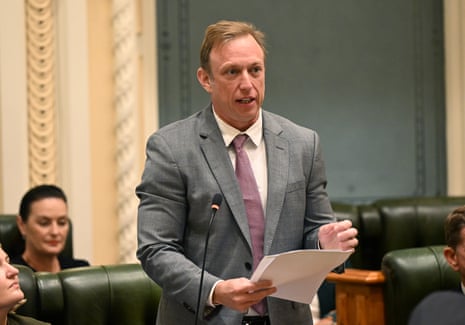
Miles apologised in April 2025, but was referred to the ethics committee. He argued to the committee that the deputy premier had failed to inform the electorate of the conflict of interest and that he had not meant to mislead the parliament.
But the bipartisan committee found that Bleijie had “abided by his parliamentary obligations in respect of disclosures of conflicts of interests”. It ruled that Miles had committed a contempt and recommended he apologise.
Miles did so on Thursday.
Greens senator says ‘immoral’ NDIS reforms are being rushed through Senate
Ima Caldwell
In an impassioned speech to the Senate, Greens senator Jordon Steele-John said the federal budget’s NDIS cuts are “immoral” and being rushed through the parliament. He put forward an amendment for the bill go to an inquiry that would see a report in August and provide a “sensible amount of time to engage disabled people”.
Steele-John said:
This is outrageous and it is wrong. Fellow senators, this is wrong. These cuts are immoral. This is not what you were elected to do, to cause this harm to cause this pain, to put these lives at risk …
Many in this place may not have a lived experience of disability. But I do hope that the majority of us have not lost our capacity for empathy, and our commitment to curiosity, and a belief that we should understand the laws that we are passing … And the impacts that they will have on people.
160,000 people now face removal from the NDIS.
The amendment failed.
Government quietly releases response to diabetes inquiry, does not adopt any proposals

Melissa Davey
On budget night the government quietly released its response to the parliamentary inquiry into diabetes, which concluded in July 2024.
The final report from that inquiry made 23 recommendations, including that the government introduce a levy on sugary drinks to encourage manufacturers to reduce sugar content; to regulate unhealthy food marketing to protect children including ads on TV, online and in gaming; and for improved food labelling targeting added sugar.
In its response published on Tuesday night, the government noted these recommendations, but did not commit to adopting them. This is despite the measures having significant support from public health experts and the Australian community, the executive manager of the Food for Health Alliance, Jane Martin, said.
More than a quarter of Australian children are above a healthy weight and more than 40% of children’s total energy intake comes from unhealthy foods.
“It’s imperative that the government takes action to push sugary drinks companies to cut the sugar in their products through a tax on sugary drinks companies,” Martin said.
A government-funded feasibility report on limiting unhealthy marketing to kids was published last week.
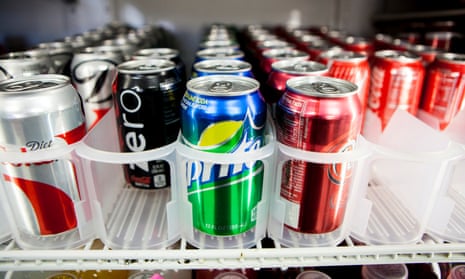
The government provided “support in principle” for nine of the inquiry’s recommendations and “noted” 14, but stopped short of adopting any proposal.
The Public Health Association of Australia CEO, Adjunct Prof Terry Slevin, said: “The public health community was hoping for a government response that committed to more direct action”.
He called for the government to commit to a high-level government taskforce to determine how to implement the recommendations.

Stephanie Convery
Cowlishaw told the court that gambling companies “derive significant revenue from individuals who gamble at excessive or problematic levels”.
He continued:
Governments also derive significant revenue from gambling taxation and thus have vested interests in maintaining weak regulatory environments and existing policy settings. The gambling industry has adopted tactics that have strong parallels with tobacco industry tactics and include sponsorship and support of research and evidence production that aligns with commercial objectives rather than public health goals.
The inquest continues.
Stephanie Convery
Inquest witness criticises federal government response to Murphy gambling report
An expert witness in the inquest to the death of a young Melbourne man who bet nearly $900,000 over four years has described the federal government’s response to Peta Murphy’s report on gambling as “extremely disappointing”.
Assoc Prof Sean Cowlishaw, a psychologist and expert in gambling harm, gave evidence at the Victorian coroner’s court on Thursday as part of the inquest into the death of 22-year-old Kyle Hudson, who killed himself in July 2021.
The coroner is investigating the circumstances and likely contributing factors to Hudson’s death, including whether betting companies Sportsbet, Entain and bet365 accurately assessed his risk of gambling-related harm.
Cowlishaw was asked his opinion on the federal government’s response to the Murphy report, after the Labor government released its contentious, much-delayed response on Tuesday, the day of the federal budget.
Cowlishaw told the court:
In absolute terms, there were 31 recommendations that were made in that report. It looks like the government has addressed three of those, so under, just under 10%. Some of the key recommendations that I think as relates to this court have been completely ignored. This includes the recommendation for the banning of gambling related inducements and inducement advertising.
There are recommendations in there that relate to restrictions on gambling advertisements in a broad sense, which are positioned as strong, but fall very far below the comprehensive ban that was indicated in the report … So I interpret these as a partial ban with a lot of caveats and again, very far below what was initially recommended in the Murphy report.