4 weeks ago
The US military has quietly overseen a large-scale offshore oil transfer operation near the Strait of Hormuz to keep Gulf energy exports flowing amid Iran's effective blockade of the critical waterway, according to a Reuters investigation.
The operation, which began in early May, involves dozens of ship-to-ship oil transfers conducted off the coasts of Fujairah in the United Arab Emirates and Sohar in Oman. According to shipping records, satellite imagery and multiple sources familiar with the operation, at least 92 vessels have participated in the network so far.
The transfers are taking place near the exit of the Strait of Hormuz, through which nearly one-fifth of global oil consumption normally passes. Iran's restrictions on shipping in the strait following the US-Israeli conflict triggered a major disruption in global energy markets and sent oil prices soaring.
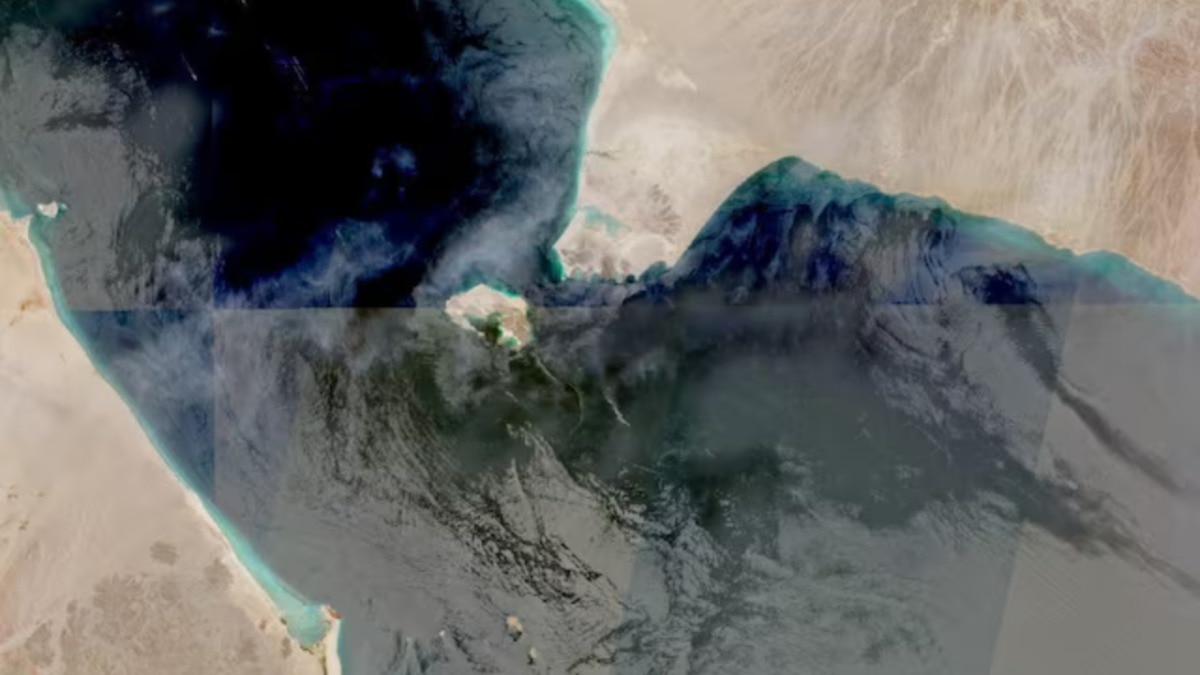
Satellite images reviewed by Reuters showed the scale of the operation. On June 11 alone, as many as 17 pairs of vessels were simultaneously engaged in ship-to-ship transfers at the two designated offshore locations.
HOW THE OPERATION WORKS
According to sources involved in the operation, participating tankers gather at designated meeting points before approaching the Strait of Hormuz. The vessels travel in staggered formations, maintaining distances of roughly 3,000 to 4,000 metres from one another.
To reduce their visibility, ships reportedly switch off transponders and dim navigation lights while moving through the area. Their movements are monitored through a network of waypoints, aerial drones, maritime drones, helicopters and other surveillance assets.
Once the tankers reach waters just beyond the area claimed by Iran as being under its control, they rendezvous with larger Very Large Crude Carriers (VLCCs). The oil is then transferred offshore in operations that can take between 24 and 40 hours to complete.
The smaller vessels subsequently return through the strait to collect fresh cargo while the fully loaded VLCCs continue towards international markets.
Eight sources told Reuters that the operation is controlled and monitored by the US military, although American personnel are not directly involved in the physical transfer of oil between ships.
APACHE HELICOPTER: KEY LINK
The operation came into focus after an Apache helicopter was shot down by Iran on June 9, an incident that later triggered retaliatory US strikes.
Four sources, including a former US official familiar with the matter, said the helicopter had been involved in supporting the offshore oil transfer mission. Reuters, however, could not independently verify the exact role played by the aircraft.
A US defence official denied that forces under US Central Command were participating in any ship-to-ship transfer operation. American officials have said both crew members aboard the helicopter were rescued by a drone vessel.
TACTIC BORROWED FROM IRAN
Maritime experts note that the transfer system resembles techniques long employed by Iran to evade international sanctions.
For years, Tehran has used offshore ship-to-ship transfers to obscure the origin of crude oil exports. The current operation differs in scale, involving multiple simultaneous transfers and significant volumes of Gulf crude, condensate and petroleum products.
Reuters estimates that more than 90 million barrels of oil and petroleum products may have moved through the offshore network since early May. While substantial, that volume remains well below the roughly 20 million barrels per day that normally transit the Strait of Hormuz before the conflict.
Michael Froman, president of the Council on Foreign Relations, described the development as ironic.
"As the old rules weaken, it is ironic that the United States is now taking a page from the playbook of China, Russia, North Korea and even Iran," he wrote, referring to the practice of moving vessels with transponders switched off.
RISKS AND COMPLIANCE ISSUES
Maritime security experts warn that Iran could attempt to disrupt the system using drones, missiles or naval assets. Several incidents have already occurred near the transfer zones.
This past weekend, a tanker off the coast of Oman was struck by what maritime security firm Vanguard described as an "unknown projectile". Although some cargo leakage occurred, no injuries or environmental damage were reported.
Shipping industry officials have also raised concerns about navigational safety. With vessels travelling at night, operating without transponders and often with lights switched off, the risk of collision has increased substantially.
Before joining the programme, shipping companies reportedly undergo extensive compliance screening conducted through the US Navy's Naval Cooperation and Guidance for Shipping office in Bahrain.
According to documents reviewed by Reuters, operators must provide ownership details, cargo documentation, tracking histories and agree to possible cargo inspections before being allocated transit windows.
GULF OIL PRODUCERS UNDETERRED
Shipping records indicate that state-owned Gulf energy companies have been among the largest users of the transfer system.
Sources identified the UAE's national oil company, ADNOC, as one of the most active participants. Kuwait Oil Tanker Company vessels have also been involved.
One example cited by Reuters involved approximately 2.3 million barrels of Kuwaiti crude that were transferred offshore near Sohar on June 6. The receiving tanker, Sea Ruby, was later tracked off India's southwest coast en route to China, where the cargo was expected to be discharged.
The future of the operation remains uncertain. President Donald Trump has said the Strait of Hormuz is expected to reopen under the framework peace agreement recently announced with Iran. However, it remains unclear whether the offshore transfer network will continue once normal shipping routes are fully restored.
- Ends
Published By:
Aprameya Rao
Published On:
Jun 16, 2026 20:02 IST